Garage Door Not Working After a Storm? Safe Steps
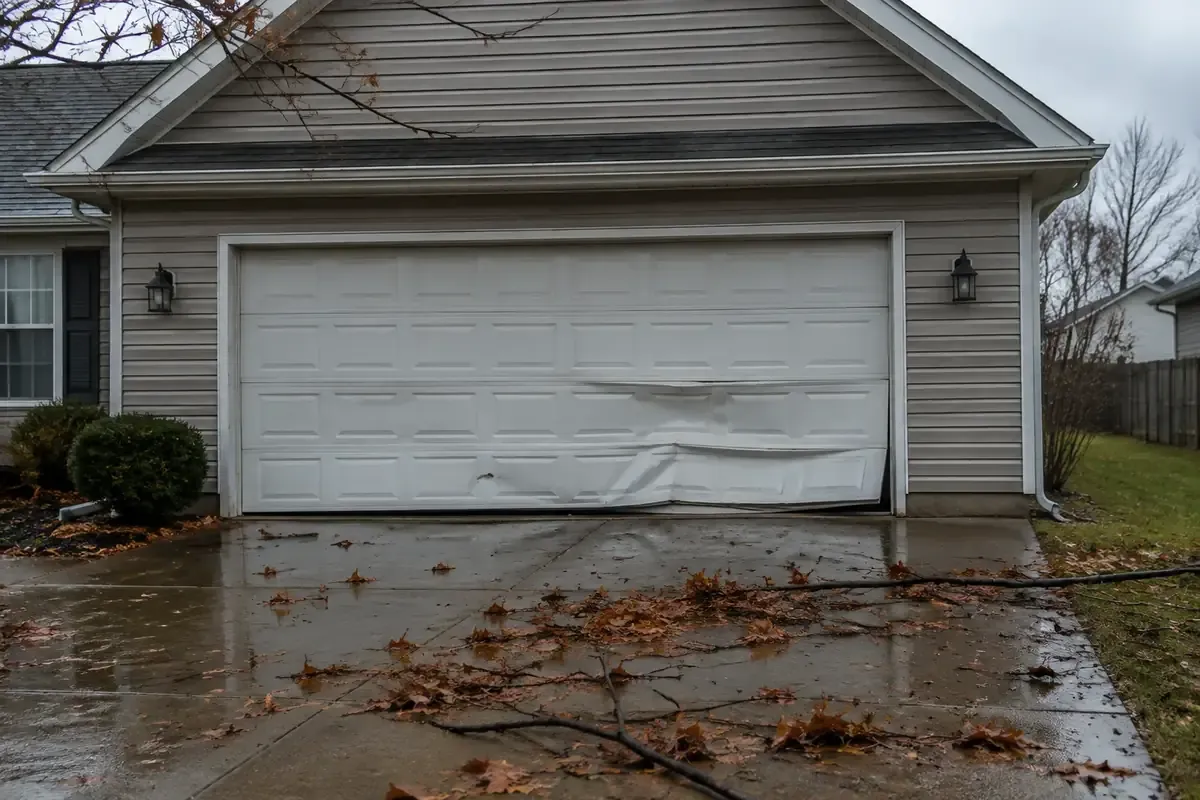
If your garage door is not working after a storm, don't keep pressing the remote. Look for bent panels, a crooked door, loose cables, water near electrical equipment, or a burned smell before you go near it. Any of those signs means you should stop using the door and arrange an assessment.
November storms around Lima can leave windblown debris, blowing rain, and wet leaves around a garage opening. The trouble may involve the door itself, the opener, or both. If anything looks unsafe, contact Same Day Garage Door about storm damage before trying to move it.
This guide focuses on visible damage, moisture, and possible electrical damage. If the garage stayed dry and undamaged and the only issue was lost power, use these safe garage door checks after a power outage instead.
Garage Door Not Working After a Storm? Start With Safety
Your first job is to decide whether it is safe to approach the garage, not whether you can get the car out. A door can look mostly normal while a track, bracket, or cable has been damaged.
Start from the driveway or another dry, clear spot. Keep children, pets, tenants, and anyone carrying cleanup tools away from the opening. If the door is partly open, don't walk or drive beneath it.
Warning signs that mean stop
Leave the door alone if you notice any of these conditions:
- A door hanging crooked or sitting unevenly in the opening
- A panel folded inward, split, or pushed out of place
- A roller outside its track or a track pulling away from the wall
- A loose, hanging, or frayed cable
- A branch or other object pressing against the door
- Water dripping onto the opener, outlet, wiring, or controls
- Smoke, sparks, a burned smell, or unusual buzzing
- Damage to the header, wall framing, or roof above the opening
You do not need to confirm exactly which part failed. These signs are enough to stop operation and ask for help.
If you see a fallen power line near the garage, stay away from it and anything it touches. Contact the utility or emergency services. For smoke, active sparking, or a possible fire, leave the area and call emergency services rather than investigating.
Look for Debris, Impact Damage, and Water From a Safe Distance
Once the storm has passed and the approach is safe, look over the outside of the opening without touching the door. Stay on stable ground. Don't use a ladder to inspect damage above the opening.
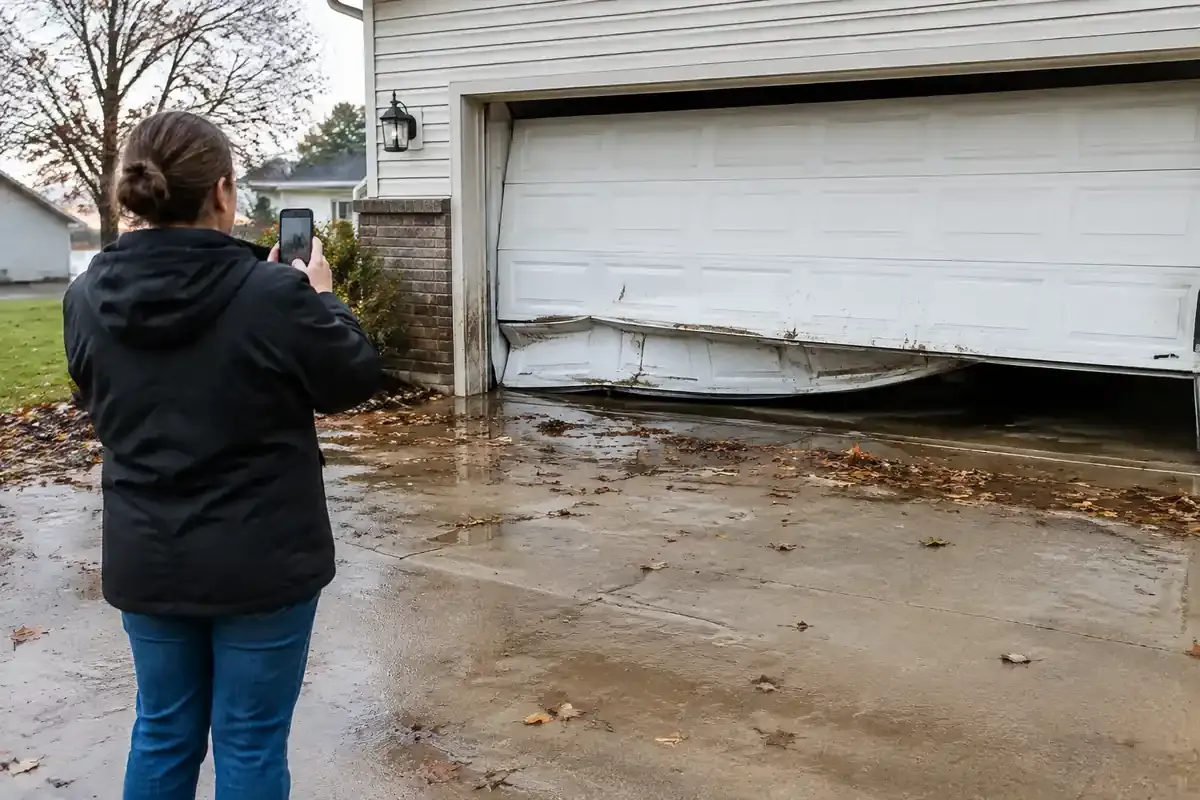
Check the shape of the door and opening
Look across the panels and along the sides. Does the door appear bowed? Is a panel pushed inward? Has a gap opened between the track support and the framing?
Wind pressure and flying debris can affect more than the outer surface. A dent near a hinge or roller may interfere with movement even when it seems small from the driveway. The location of the damage matters as much as its appearance.
Also look at the trim, header, and nearby siding. If the opening itself has shifted or broken, moving the door may put more strain on already damaged supports.
Notice where the water went
A wet driveway is not the same thing as a wet opener. Look for water trails down the garage wall, drips from the ceiling, dampness around the opener housing, and water near outlets or wall controls.
In an attached Lima garage, rain may enter through storm-damaged roofing or around the opening. In a detached garage, a roof leak may put water directly above equipment that otherwise looks untouched. Don't assume electrical parts stayed dry just because there is no standing water.
Leave debris alone if it is touching the door, a cable, a track, or damaged framing. Pulling out a branch may release pressure or allow something to shift. Clearing the driveway can wait until you know what the debris is supporting or pressing against.
Separate Door Damage From Possible Opener Damage
You can describe what you see without trying to diagnose it. That distinction helps when you call: “The bottom panel is bent and the door is crooked” gives a technician more useful information than “The opener is broken.”
The table below can help you sort the warning signs. It is a guide for deciding when to stop, not a set of instructions for testing damaged equipment.
| What you notice | What it may involve | Safe next step |
|---|---|---|
| Bent panels, a crooked door, or a roller outside the track | Door sections, tracks, hinges, cables, or supports | Keep the opening clear and do not operate or release the door |
| The opener hums or strains but the damaged door does not move | A jammed door, opener damage, or both | Stop pressing the controls and request an assessment |
| A burned smell, unusual buzzing, or visible scorching after lightning | Possible electrical damage | Stay clear; arrange electrical evaluation and opener service as appropriate |
| Water on the opener, outlet, or wiring | Moisture affecting electrical equipment | Do not touch, plug in, reset, or test the equipment |
| The door starts down, then reverses after debris or water entered | An obstruction, sensor trouble, binding, or damage | Do not override the safety system or force the door shut |
When lightning may be involved
A garage door not working after lightning may have damage to the opener's electronics, its controls, or the electrical supply. A silent opener alone does not prove a lightning strike, and a light that still comes on does not prove the opener is safe.
Don't use repeated resets as a way to find out. If there is scorching, a burned smell, wet wiring, or an electrical problem elsewhere in the garage, have the electrical hazard addressed before anyone tries to operate the equipment.
Once the area is safe, garage door opener repair and assessment can help determine whether the opener, its controls, or the door's movement needs attention. A damaged opener and a damaged door can exist at the same time.
Document the Damage Without Moving Anything
Photos can help you explain the situation to a repair company, property owner, or insurer. Take them only from places you can reach safely. A better picture is not worth stepping under a hanging door or into water near an outlet.
Start with a wide view of the entire opening. Then, if you can do so without getting closer to a hazard, photograph visible panel damage, displaced tracks, debris, and water stains. Use your phone's zoom rather than reaching around a damaged section.
Write down what happened before the door stopped working. Useful details include whether you heard a bang during the storm, saw water enter the garage, or noticed a burned smell afterward. If you already tried the opener, describe what happened without running it again for a video.
Helpful details for a service call
Have these observations ready:
- Whether the door is fully closed, partly open, or fully open
- Whether a vehicle is trapped inside
- Any visible damage to panels, tracks, cables, or framing
- Where you can see moisture
- Any sound or smell you noticed before stopping use
- Whether there is another safe way into the garage
Property managers should also tell tenants not to use the door. Let other maintenance staff know that the door is out of service so nobody presses the wall button while someone else is looking at the damage.
Ask your insurer what documentation it needs before damaged materials are discarded. Coverage depends on the policy and cause of loss, so don't assume a particular repair will be covered.
Don't Energize Wet Equipment or Force a Damaged Door
After a cold, wet storm, the urge to close the garage quickly is understandable. But forcing the door can turn repairable damage into a larger problem or expose someone to a falling door.
Don't push a bent panel back into place, pull a roller toward its track, loosen brackets, or handle cables and springs. These parts can carry significant force even while the door is motionless.
Leave the emergency release alone when damage is suspected
The red release cord disconnects the opener from the door. It does not repair the door or make it safe to lift.
If the door is crooked, partly open, off track, or has a damaged spring or cable, releasing it may allow unexpected movement. Don't pull the cord as a storm-damage test, and don't ask someone to hold the door while you work underneath it.
Keep wet electrical equipment off
Do not touch a wet plug, opener, wall control, or outlet. Do not restore power to equipment that may have taken on water just because the outside now looks dry.
If power needs to be isolated, have that handled from a safe, dry location by someone qualified to do it. Don't cross standing water or approach a wet electrical panel to shut something off.
Avoid improvised drying methods, too. Opening the opener housing or aiming a heater at it does not establish that it is safe to energize. The equipment needs an appropriate evaluation before it returns to use.
Don't override a door that reverses
Storm debris or water may interfere with the safety sensors, but reversal can also happen when the door binds or encounters damage. Don't assume the sensors are the only problem.
Never bypass the sensors or keep forcing closure with the wall control to secure a damaged opening. Keep people clear and ask for help instead. Protecting the garage contents matters, but it should not require standing beside an unstable door.
Know When to Call a Garage Door Technician or Electrician
Visible door damage belongs with a garage door technician. That includes bent tracks, displaced rollers, damaged panels, loose supports, broken springs, and cable problems. The assessment should consider the whole door, not just the most obvious dent.
Wet electrical equipment, damaged outlets, scorched wiring, or trouble with the garage's electrical supply may also require a qualified electrician. If the building opening or roof is damaged, a separate building repair assessment may be needed before the door can operate safely.
You don't have to choose the exact repair before calling. Describe the conditions and ask what needs to be made safe first. Same Day Garage Door offers garage door repair and emergency service in Lima and nearby towns, including Elida, Delphos, Wapakoneta, and Spencerville.
What affects repair versus replacement
A damaged panel may be replaceable, but that depends on the door's condition and whether a suitable section is available. Widespread damage, distorted supports, or damage across several connected parts may change the recommendation.
An opener that stopped after a storm also needs diagnosis before a repair or replacement decision. Replacing the opener will not solve a door that is binding, unbalanced, or off track.
Ask for an explanation of what failed, what work is needed, and what must happen before the door can be used again. Final prices from Same Day Garage Door are confirmed after the technician sees the door.
Keep the Garage Out of Use Until It's Safe
November weather can make the wait uncomfortable, especially when rain or cold air is entering an attached garage. Use another entrance if you have one, keep people away from the damaged opening, and don't attach tarps or other coverings to loose door parts.
Tell the repair company if the door is stuck open or the property cannot be secured. Also mention any trapped vehicle, unsafe overhead parts, or suspected electrical damage so the situation is clear before someone arrives.
The safest approach is simple: observe from a distance, document what you can, and stop before a check becomes a repair attempt. A door that moves is not necessarily a door that is safe to use.
Call Same Day Garage Door at (419) 909-0197 to describe the storm damage and ask about emergency service. Emergency garage door service is available 24/7.
Frequently asked questions
Can cold weather affect my garage door opener after a storm?
Cold weather can make existing door movement problems more noticeable, and moisture may freeze around the bottom seal. But a crooked door, wet opener, or burned smell should not be treated as a routine cold-weather issue.
Is there a reset button I should press after lightning?
Reset procedures vary by opener, and a reset cannot repair storm damage. Don't press buttons or cycle power if the equipment is wet, scorched, buzzing, or giving off a burned smell.
How do I get my garage door opener working after a power outage?
First separate a simple outage from storm damage. If there is moisture, impact damage, or suspected electrical damage, don't restore power or test the opener until the affected equipment has been assessed.
Can I manually close a garage door that was damaged in a storm?
Don't manually move a door that is crooked, off track, visibly damaged, or has loose cables. Pulling the emergency release can allow unexpected movement, especially when the door is partly open.
Do I need an electrician or a garage door repair company?
A garage door technician handles the door, tracks, springs, cables, and opener-related repairs. Wet outlets, damaged supply wiring, or other electrical hazards may also require a qualified electrician before the opener can be safely tested.