Garage Door Not Working After Power Outage? Safe Checks
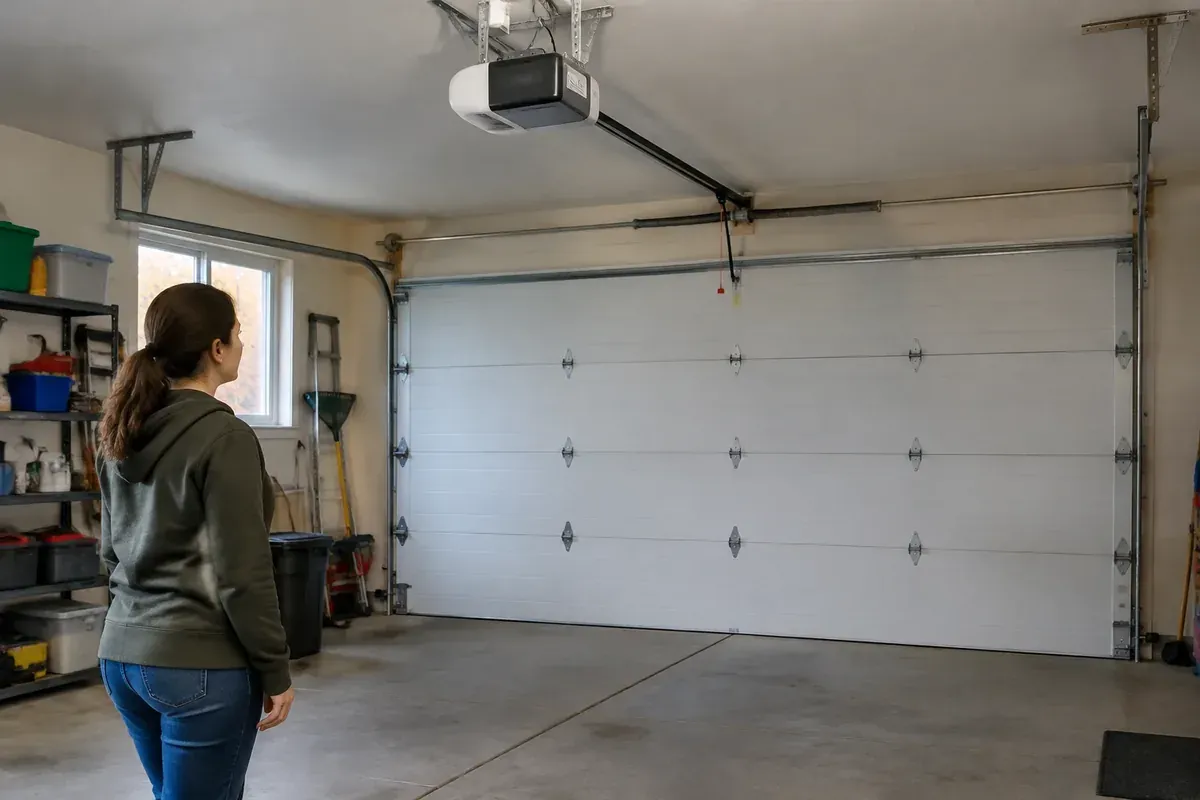
If your garage door is not working after a power outage, start by checking whether power has actually returned to the opener’s outlet. Lights working inside your house do not prove the garage circuit is working. Next, look for opener lights, sounds, or error indicators without removing any covers.
Do not assume the opener is ruined, and do not start pressing reset buttons at random. If you notice a burning smell, damaged wiring, or a breaker that trips again, stop. For information about garage door services in Lima and nearby areas, you can contact Same Day Garage Door.
Garage Door Not Working After Power Outage: Read the Symptoms
What the opener does now tells you more than the fact that an outage happened. Before trying anything else, stand clear of the door and notice what happens when you use the regular wall control.
A completely silent opener with no visible lights points you toward the power supply or an internal opener problem. An opener that lights up or clicks is receiving at least some power, but that does not mean its motor or controls are working correctly.
Notice what works and what does not
Useful observations include:
- Whether the opener’s courtesy light comes on.
- Whether the wall control has its usual indicator light.
- Whether the opener clicks, hums, or stays silent.
- Whether the door starts moving, reverses, or stays still.
- Whether any indicator is blinking in a repeating pattern.
- Whether other lights or outlets in the garage work.
Do not keep pressing the button to see if something changes. If the motor hums but the door does not move, stop trying to run it. Repeated attempts can add strain without telling you what is wrong.
Also consider what happened during the outage. If someone operated the door manually, tell the technician. That detail can change the diagnosis, but it is not a reason to start adjusting the opener or door hardware yourself.
Check Power Availability Before Assuming Opener Damage
In a Lima home with an attached garage, the kitchen lights may be back while the garage outlet remains without power. A detached garage can have a separate supply arrangement, making the difference even less obvious.
Start with ordinary observations. Is the garage light working? Are nearby outlets working? Is the opener plugged into its usual receptacle? These clues help, but only checking the actual opener outlet can establish whether that location has power.
Check the outlet only if you can reach it safely
If the opener’s outlet is readily accessible, dry, and undamaged, a small lamp you know works can help check for power. Do not climb onto a vehicle, stand on stored items, or stretch from an unstable ladder to reach a ceiling outlet. If safe access is a problem, leave the check to a professional.
A lamp working at that outlet suggests power is available. It does not prove the wiring is sound under every condition, and it does not diagnose the opener itself.
If the outlet is dead, look for a familiar GFCI receptacle that may protect it. Its location can vary, so do not assume it must be beside the opener. Follow the device’s own instructions, and do not reset anything that is wet, damaged, hot, or showing signs of burning.
You can also look at the breaker panel if it is dry, accessible, and appears normal. Do not remove the panel cover or touch wiring. An uncertain breaker position or an unclear circuit label is a good reason to call an electrician rather than guess.
Consider Protective Shutdowns and Opener Faults
An outage and an opener failure can happen together without the outage being the full explanation. The opener may have lost its electrical supply, entered a protective state, or developed a fault that needs testing.
Some openers have motor protection that can temporarily interrupt operation after overheating. If someone has repeatedly tried to run a stuck door, stop the attempts and consult the manual. Do not use repeated button presses as a test of whether the motor has recovered.
An electrical disturbance can also affect internal electronics. Still, a silent opener is not enough evidence to call its control board damaged. A loose plug, a tripped protective device, and an internal electrical fault can look similar from the floor.
A powered opener can still have a different problem
If the opener runs but the door will not close, look for an obvious object in the doorway or in front of the safety sensors near the floor. Keep your hands away from moving parts, and never bypass the sensors to make the door operate.
In Lima’s colder months, a door can also stick at the bottom seal or meet resistance unrelated to the outage. Stop if the door appears stuck, crooked, or strained. Our guide to garage doors that will not open in Lima’s winter explains why cold-weather symptoms deserve a separate look.
The practical rule is simple: power being available does not make continued operation safe. A struggling door needs diagnosis, not more force from the opener.
Make Safe Visual Checks of the Plug and Indicators
You can gather useful information without touching the opener’s electrical parts. From a safe position, look at the visible cord, plug, outlet, wall control, and opener housing.
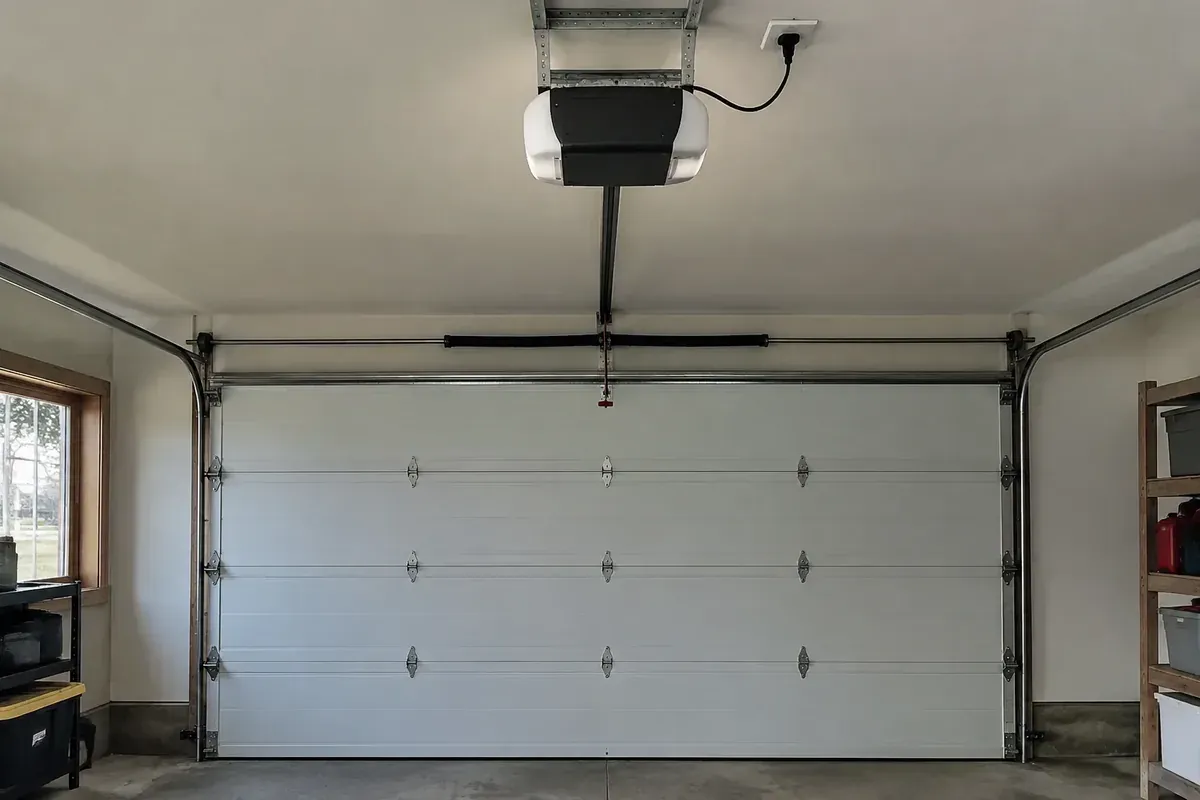
A plug that appears partly pulled out may explain the loss of power. Only handle it if the outlet is safely accessible and everything is dry, cool, and visibly undamaged. Do not touch a damaged cord or attempt to straighten burned or distorted plug parts.
Record warning signs before changing anything
Look for discoloration around the outlet, a cracked cord covering, or marks that suggest overheating. A burning odor, smoke, sparking, or unusual heat means troubleshooting should stop. Stay clear and get appropriate help; active smoke or fire calls for emergency assistance.
For a blinking indicator, write down the pattern or take a short video from a safe location. Also note where the light appears. A light on a floor-level sensor may have a different meaning from one on the motor unit or wall control.
Do not assume every blinking light means a reset is needed. Different models use indicators differently, and some lights simply report normal status. Clear observations are more useful than a guessed diagnosis when you speak with a professional. You can also review Same Day Garage Door’s service information.
Consult the Opener Manual Before Any Reset
There is no universal reset procedure for garage door openers. The right action depends on the brand, model, and symptom. A button labeled “Learn” or “Program” should not be treated as a general power-reset button.
Find the model information on an accessible label or in your existing paperwork. Do not remove the housing or climb into an unsafe position to read it. For property managers, maintenance files or installation records may provide the details without anyone touching the unit.
Follow the procedure for your exact model
Check the manual’s troubleshooting section for loss of power, an unresponsive wall control, or the indicator pattern you observed. If it gives a power-cycle procedure, follow that procedure rather than borrowing instructions for a different opener.
Do not guess at unplugging times or button-holding sequences. Avoid controls for travel limits, force settings, or stored devices unless the manual specifically directs you to them for the issue you have.
If the approved procedure does not restore normal operation, stop there. Repeating it adds little useful information. Tell the technician what you tried and whether the opener’s lights, sounds, or behavior changed afterward.
Do Not Open Electrical Housings or Keep Resetting a Breaker
Removing the opener cover turns a basic homeowner check into electrical troubleshooting. Internal parts may present hazards even after the unit is unplugged. There is no need to expose them just to confirm that the opener is unresponsive.
The same caution applies to outlets, wall-control wiring, and breaker panels. Leave covers in place. Do not test exposed wiring, replace internal components, or run temporary wiring to get the door moving.
A breaker or GFCI that trips again is reporting a problem, not asking for another reset. Stop using that circuit or equipment and have the cause checked. Repeated resets can re-energize a fault without correcting it.
Avoid extension cords as a workaround for an outlet that stopped working. They can hide the original problem and introduce other risks. My advice is to keep this visit to the garage simple: observe, document, and stop when the next step requires electrical access or force.
Decide Whether to Call an Electrician or a Garage Door Professional
The dividing line is usually the power supply versus the opener and door system. You do not need to identify a failed part before calling. You only need to describe what is working, what is not, and any warning signs.
| What you find | Best next step | Why |
|---|---|---|
| The opener outlet has no power, while other areas have power | Contact an electrician | The garage circuit, outlet, or protective device needs evaluation. |
| A breaker or GFCI trips again | Stop resetting it and contact an electrician | A recurring trip needs electrical diagnosis. |
| The outlet has power, but the opener remains silent | Contact a garage door professional | The opener or its controls may need testing. |
| The opener hums, strains, or moves the door unevenly | Stop operation and contact a garage door professional | Continued use may worsen a door or drive-system problem. |
| An indicator shows a repeating pattern | Record it and check the model’s manual | The meaning depends on the opener and indicator location. |
| The outlet or house wiring shows heat damage | Stay clear and contact an electrician | The supply connection needs attention before further use. |
If both the outlet and opener are suspect, the electrician and garage door technician may need to address separate parts of the problem. That is better than replacing an opener only to discover its supply is still faulty.
For a rental or managed property, ask occupants to stop using the affected door and share their observations. Note whether the wall control responds, whether the outlet was checked safely, and whether anyone attempted a reset. These details help avoid repeating unhelpful tests.
For garage door services in Lima and nearby areas, contact Same Day Garage Door at (419) 909-0197. Use the contact form linked above to ask about available services.
Frequently asked questions
Is there a reset button on a garage door opener?
Some models have reset functions, but there is no universal reset button or procedure. Check your exact model’s manual, and do not assume a Learn or Program button will fix a power problem.
What are common LiftMaster problems after a power outage?
Possible causes include loss of power at the outlet, a control issue, or an internal opener fault. If the opener has power and displays an indicator pattern, use the manual for that specific model rather than assuming the pattern means the same thing on every LiftMaster.
How can I open a garage door that has lost power?
Many garage doors allow manual operation, but the safe method depends on the system and the door’s condition. Consult the manufacturer’s instructions or get professional help, especially if the door is partly open, crooked, unusually heavy, or appears damaged.
Does unplugging the garage door opener reset the remotes?
On many models, a routine loss of electrical power does not erase stored remotes. Check your model’s manual before using any reset controls, since a memory-clearing function is different from simply disconnecting power.
Does an unresponsive opener mean I need a replacement?
No. A dead outlet, a protective shutdown, or a repairable control problem can leave an opener unresponsive. Confirm the power supply and have the opener inspected before deciding on replacement.