Garage Door Not Working After Pulling Red Cord? Fixes
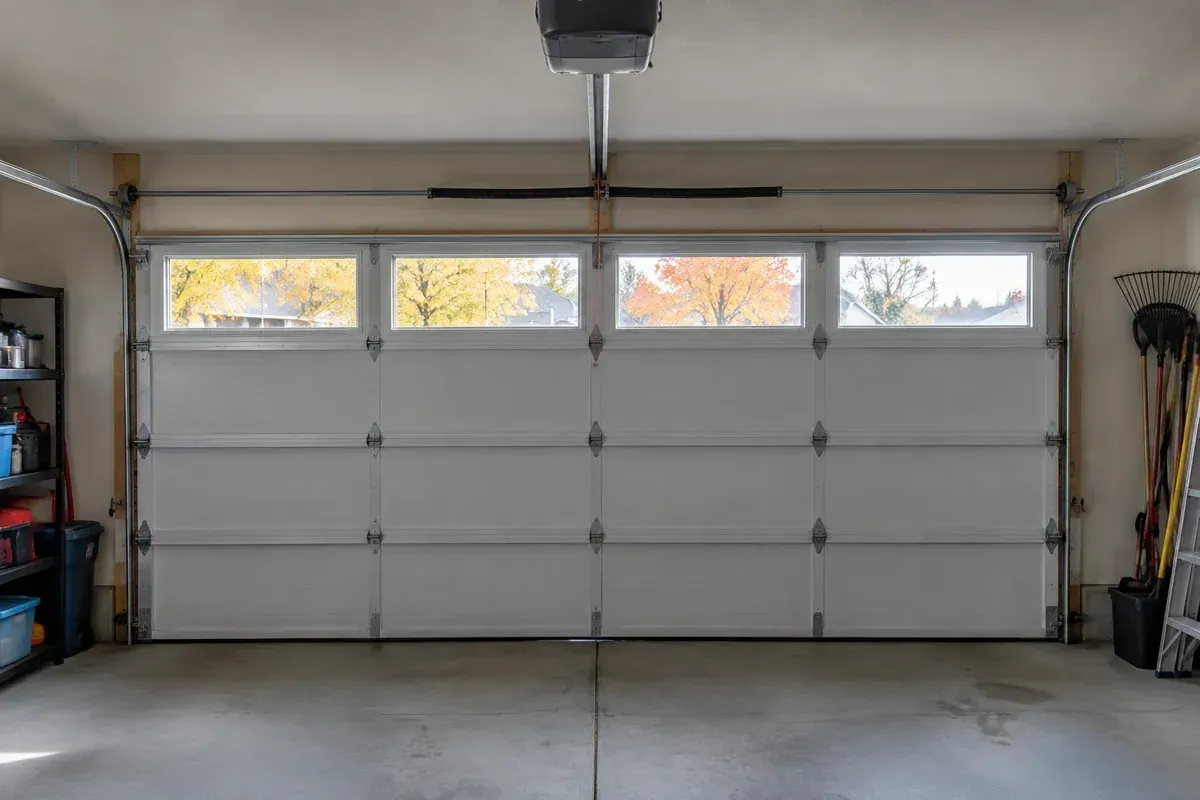
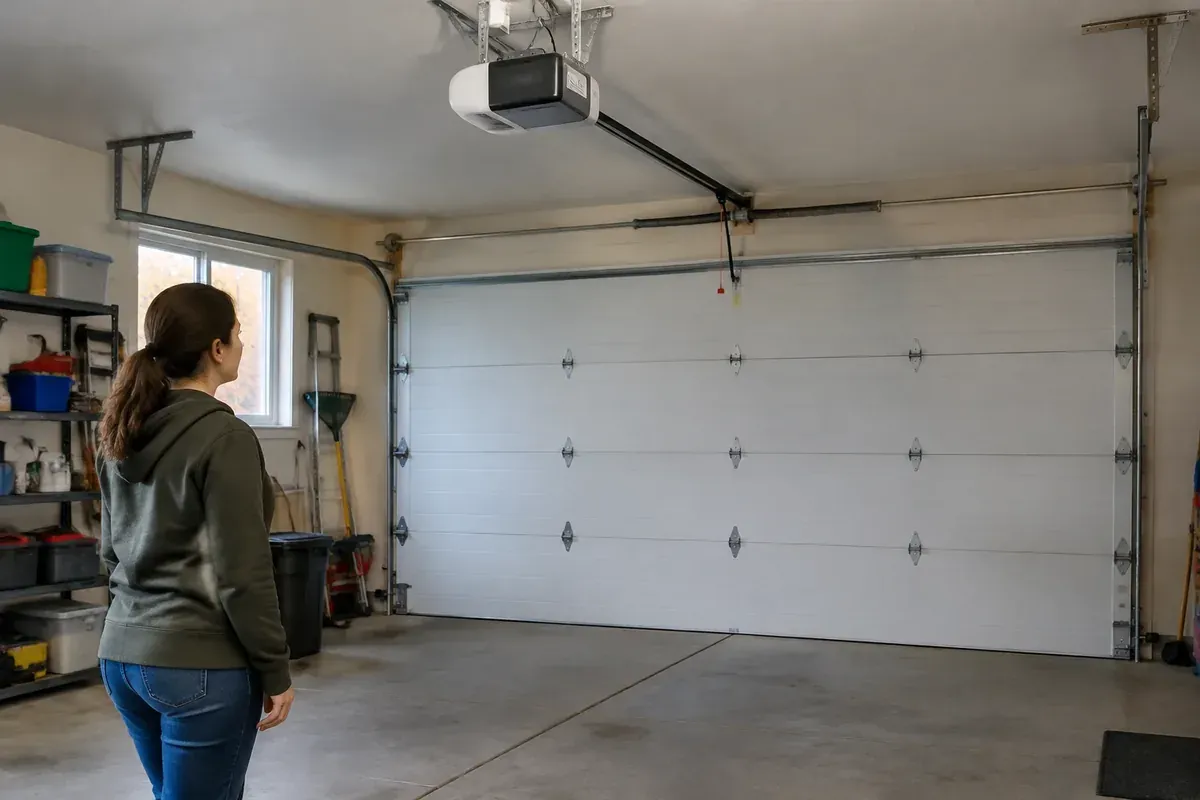
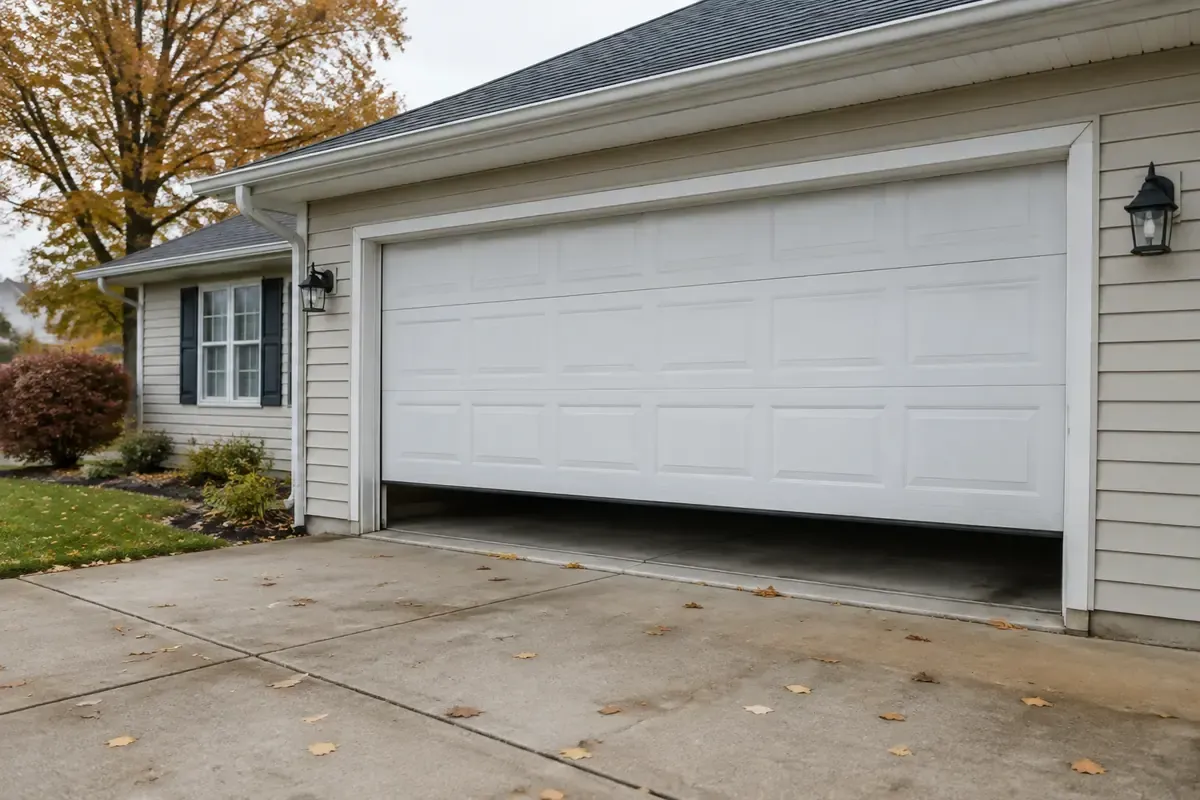
If your garage door is not working after pulling the red cord, the opener may simply be disconnected from the door. The motor can still run, but it cannot move the door until the release mechanism reconnects. That is different from a power failure, and pressing a reset button usually is not the answer.
Before trying anything, look at the door. As a general safety precaution, consider leaving the release alone and keeping people away if the door is open, crooked, damaged, or appears unstable. You can contact Same Day Garage Door for help with a disconnected or unsafe door. Even if the door is closed and looks undamaged, do not assume reconnection is appropriate. Consult the instructions for your opener before deciding what to do.
Signs Your Garage Door Is Not Working After Pulling the Red Cord
The most useful clue is what changed immediately after you pulled the release. Did the opener stop responding altogether, or can you hear it operating while the door stays still? Those symptoms point in different directions.
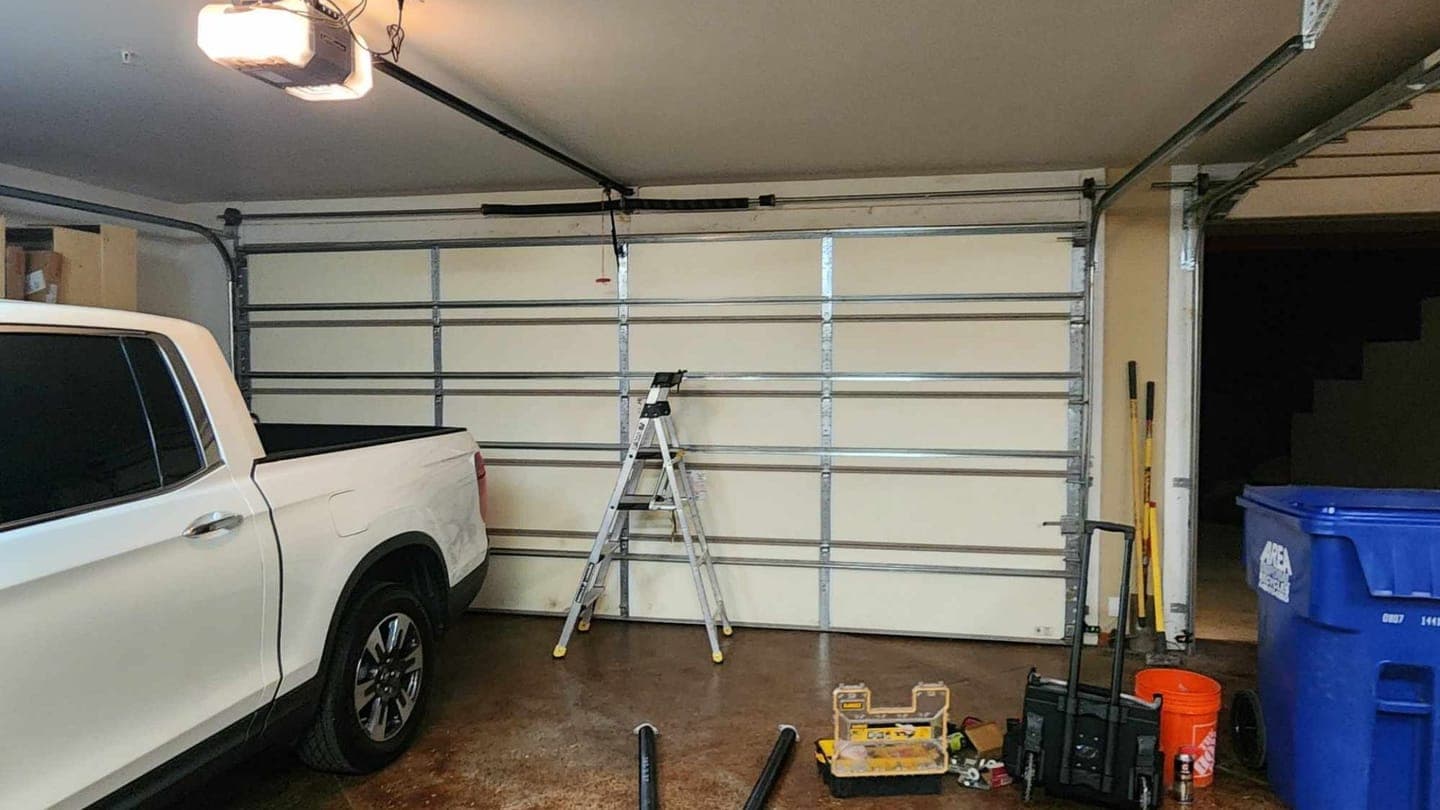
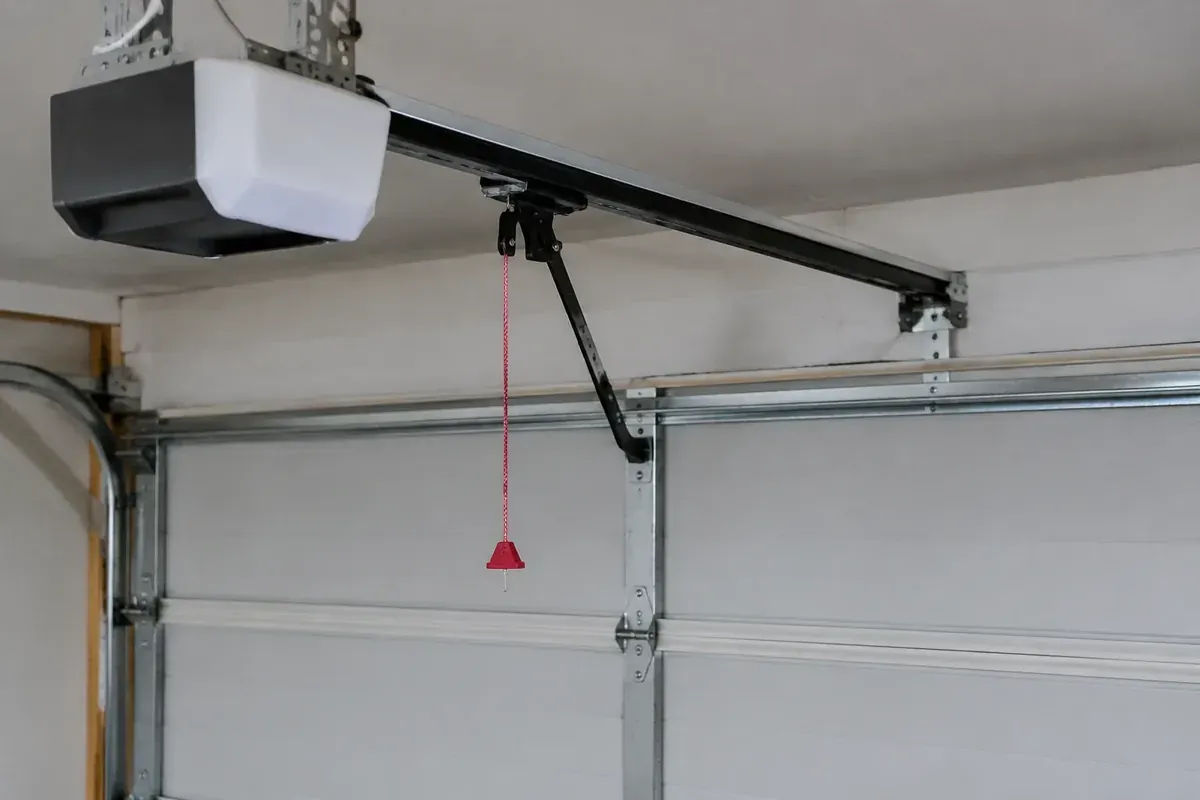
On many overhead openers, a rail runs between the motor unit and the front of the garage. A moving carriage, often called a trolley, connects the opener's drive system to the arm attached to the door. The emergency release lets that connection separate so the door can operate manually.
The opener runs, but the door stays put
If you already watched the opener run and saw its carriage travel without taking the door along, the release may still be disengaged. The same can happen when you hear normal operating sounds but the door arm does not move with the drive carriage.
That does not automatically mean the motor has failed. It often means the motor's movement is no longer reaching the door. Avoid repeatedly pressing the remote just to confirm the same result, especially if you cannot see the entire opening.
A hum by itself is less useful. A motor that hums without visible movement could have another problem, so do not treat every motor sound as proof that the release is the only issue.
Nothing responds at all
Pulling the red cord normally changes a mechanical connection. It does not serve as an electrical power switch, erase remote programming, or restore power after an outage.
If the opener is completely silent and its usual indicators are off, there may be a separate power issue. You can look for an obviously unplugged cord or confirm whether the garage has power without opening the motor housing or handling wiring. Do not work around wet electrical equipment.
After a Lima storm, both conditions can exist together: the power is still out, and the door is disconnected because someone pulled the release. Restoring electricity addresses only the power side. The release may still need to be reconnected according to the manual.
| What you notice | What it may mean | Suggested precaution |
|---|---|---|
| The drive carriage moves, but the door does not | The emergency release may still be disengaged | Check door condition and consult the exact model manual |
| The opener is silent with no usual indicators | Power may not be reaching the opener | Make a visual power check without touching wiring |
| The motor hums but nothing visibly moves | The cause may be something other than a disconnected release | Stop repeated attempts and request diagnosis |
| The door is crooked, hanging, or visibly damaged | A mechanical door problem may be present | Consider staying clear and seeking professional help rather than attempting reconnection |
| The release will not engage as the manual describes | The latch, trolley, alignment, or another part may need attention | Stop rather than forcing the connection |
What the Emergency Release Actually Disconnected
The red cord usually operates a release lever at the trolley on a rail-style opener. When that release disengages, the door is no longer being moved by the opener's drive system. The cord has done its intended job, even if the result looks like a broken opener.
People often describe this as a garage door stuck in manual mode. That is a useful description, but the door is not necessarily waiting for an electronic reset. A physical latch or coupling may still be in its released position.
Manual mode is not the same as a broken opener
Think of the opener and the door as connected parts that can be separated for manual use. The opener supplies movement, while the door's spring system helps balance the door's weight. Pulling the release does not repair, remove, or replace that spring system.
If the door was operating normally before a power outage and someone released it while it was safely closed, a disconnected trolley may explain the whole problem. If the door was already struggling, reconnecting it may simply bring the original problem back.
This distinction matters when deciding what kind of help you need. A disconnected release does not automatically call for a replacement opener. A damaged trolley or an opener that cannot complete its normal movement may call for garage door opener repair and diagnosis, but that decision should follow an inspection.
Not every release works the same way
Different opener designs use different release arrangements. Some rail-mounted models have a lever that must return to an engaged position. Others reconnect when the drive carriage and door trolley meet under conditions described in the owner's manual.
Wall-mounted openers do not use the same overhead rail arrangement. Even openers from the same manufacturer can have different release instructions, depending on the model.
That is why advice such as “pull the cord toward the door” is not a safe universal instruction. The direction, door position, and reconnection method need to match your equipment. If the manual's illustration does not look like your release, stop and confirm the model instead of trying a nearby procedure.
Why Reconnecting May Not Fix the Original Door Problem
Before you focus on the release, ask why it was pulled. A power outage is one reason. A door that had already jammed, become crooked, or stopped partway is a different situation.
If you pulled the cord because the door would not move, the release may have exposed an existing mechanical problem rather than caused it. Reconnecting the opener cannot straighten a damaged track, repair a cable, or restore a broken spring.
A heavy or binding door needs attention
A properly functioning spring system helps support the door. When a spring breaks or another part binds, the door can become unexpectedly difficult to move. The opener is not a substitute for that support.
Do not use repeated motor attempts to pull a resistant door through a tight spot. Also, do not lift a questionable door just to see how heavy it feels. If you already noticed that it was unusually heavy during manual use, that is enough reason to stop.
A visible separation in a spring, a cable hanging loose, or a door sitting unevenly can signal a problem that needs professional attention. Garage door spring repair and replacement involves loaded components that should not be adjusted as part of a homeowner reconnection attempt.
Lima weather can explain the timing, not the whole diagnosis
During cold weather in Lima, moisture around the bottom seal can freeze against the driveway. A door may resist opening even though the release and opener are working as designed. Forcing it with the opener or yanking on the release does not solve that resistance.
Leaves, stored tools, and other objects can also block the door's path. From a safe position, look for an obvious obstruction without putting your hands under the door or reaching into track hardware.
In an attached garage, it is easy to assume that any problem following an outage is electrical. In a detached garage, it is easy to blame the weather. Neither assumption should replace a look at the door itself, especially if the door had been noisy, uneven, or hesitant before the release was used.
Safe Checks Before You Try to Reconnect
The goal of these checks is to decide whether a manual-guided reconnection is appropriate. It is not to prove that you can move the door or make the opener catch by force.
Start with the door's position. As a general precaution, consider a homeowner reconnection attempt only if the door is fully closed, appears stable, and has no visible damage. Those observations alone do not establish that reconnection is safe. If it is partly open or you are uncertain about its condition, consider leaving the release alone and asking for professional guidance.
Look without touching loaded parts
Stand clear of the door's path and inspect what you can see from the floor. Do not climb onto a vehicle, stretch from a doorway, or place a ladder beneath an open door to reach the release.
Look for these warning signs:
- A door that sits crooked or has an uneven gap at the floor.
- A cable hanging loose, fraying, or displaced from its normal path.
- A roller outside the track or a visibly bent track.
- A separated spring or damaged spring hardware.
- A bent door arm, loose connection, or cracked trolley part.
- A panel that has buckled, split, or pulled away from its hardware.
- An object caught where the door, track, or arm needs to move.
You do not need to identify the exact failed part. Seeing a clear problem is enough to stop. Keep your hands away from springs, cables, drums, brackets, and the gaps between door sections.
Find the exact opener model
If you can read the opener's label from a safe position, consider using its model information to find the matching owner's manual rather than relying on instructions for the same brand.
Read the emergency-release and reconnection sections together. Pay attention to the required door position, power precautions, release-lever position, and method used to reconnect the drive. A procedure for a different model can leave the latch disengaged or encourage movement at the wrong time.
If you cannot identify the model or obtain instructions that match the hardware, professional reconnection is the safer choice. Guessing from the color of the cord or the shape of the motor cover is not enough.
Keep everyone out of the operating area
As a general safety precaution before any manual-approved action, consider clearing people, pets, and loose objects from the opening. It is also sensible to check that nobody else has a remote in hand and let anyone in the house know not to use the wall control.
For property managers, this includes tenants and maintenance staff. A quick message that the garage door is out of service can prevent someone from activating it while another person is inspecting the release.
As a further precaution, avoid standing under the door or reaching into the trolley while someone operates the opener. Consider postponing the attempt if you cannot keep the area controlled.
When Manual-Guided Reconnection Is Appropriate
As a general precaution, consider reconnection only with a fully closed door that appears stable and free of visible trouble, and with instructions matching the exact model. Look for visible trouble with the release, too, such as a bent lever, damaged cord attachment, or broken latch parts. A visual check is not a guarantee that a homeowner attempt is appropriate; uncertainty is a good reason to seek professional guidance.
The basic idea is to restore the connection between the door and the opener. The safe way to do that varies, so the manual must determine the actual actions. Do not combine instructions from different videos or different opener brands.
Follow the model's release position and engagement method
Your manual may describe repositioning the release lever, allowing the carriage to engage during a controlled operating cycle, or another model-specific procedure. Follow its power precautions and keep your hands clear of moving parts throughout.
Do not yank harder because the release does not seem to change position. Do not tie the lever in place, wire the latch shut, or use a tool to hold the trolley together. Those shortcuts can hide a failed part and interfere with the emergency release later.
A release cord is also not a handle for lifting or lowering the door. Pulling on it to move the door can damage the release assembly or cause unexpected disengagement.
Check the result without forcing movement
A click may indicate engagement on some models, but sound alone is not proof that everything is correct. Use the manual's method to confirm reconnection and follow its directions for checking operation afterward.
During any permitted operating check, stay clear and watch the door's movement. Stop if it jerks, binds, moves unevenly, makes a new harsh noise, or fails to move with the opener. Do not reach toward the connection while it is moving.
If the trolley passes without catching, the lever does not stay in the required position, or the connection releases again, stop. A worn or damaged part may be involved. Repeating the same cycle is not a repair.
Leave programming controls alone
The learn button and other programming controls generally deal with functions such as remote pairing or settings. They are not a substitute for restoring a mechanical trolley connection.
Changing travel or force settings can also complicate the problem. A door that worked before the release was pulled should not need extra force merely because the trolley was disconnected. Leave those settings alone unless the correct manual calls for a procedure and you can carry it out safely.
Why You Should Be Cautious About the Release on an Open or Unstable Door
An open door has stored weight above the opening. If its spring support is compromised, releasing the opener can allow the door to move suddenly. As a general precaution, avoid experimenting with release directions on an open or partly open door and seek professional guidance instead.
Even if the door has stayed in position for a while, that does not prove it is safe. A damaged cable, spring, roller, or bracket can change how the door is supported. You cannot confirm that support simply by looking at the red cord.
Avoid trying to catch or prop a moving door
As general safety advice, move clear if a door begins to move unexpectedly rather than trying to catch it, stand beneath it, or put your foot under the bottom edge.
Avoid using a ladder, trash can, board, or vehicle to prop up a questionable door. Improvised supports can slip, and moving objects underneath puts you in the danger area. As a precaution, keep children, pets, tenants, and visitors away from both sides of the opening.
If the door is open and the release has already been pulled, consider leaving the controls alone while you seek professional guidance. When speaking with a technician, describe the door's position and explain that the emergency release is disengaged. That information helps them understand the situation before anyone approaches the hardware.
Do not risk an injury to get a vehicle out
A trapped car can make the problem feel urgent, particularly when you need to get to work or manage a tenant's access. Still, forcing the door is not a reasonable trade for that inconvenience.
If another exit is available, use it and keep the garage out of service. If there is no safe access to the release or opener, do not break into the mechanism or improvise a way to pull the cord from outside.
This is a good point to request emergency garage door repair help in Lima rather than continuing a reconnection attempt. An unstable door needs to be made safe before anyone worries about normal opener operation.
When to Stop and Request Professional Reconnection
A simple release issue should not require force, hardware adjustments, or repeated guessing. If the correct manual does not lead to a clear, secure reconnection, stop and have the door and opener inspected together.
The same applies if the door was difficult to use before the cord was pulled. Reconnecting it without addressing the original resistance can leave you with the same failure or put added strain on the opener.
Explain what happened before and after the release
When you call, describe the sequence in plain terms. For example, explain that the power went out, the release was pulled with the door closed, and the motor now runs without moving the door. Or explain that the door jammed first and someone pulled the cord afterward.
Mention whether the door is currently open or closed, whether it looks level, and whether you noticed a loose cable or other visible damage. Give the opener brand and model if you can read them safely.
You do not need to diagnose a trolley, spring, or motor over the phone. A clear description is more useful than a guessed part name. Do not operate the door again just to collect more details.
Ask for a diagnosis before approving a replacement
A disconnected release alone is not proof that you need a new opener. The repair may involve reconnection, a damaged release assembly, or a door problem that has nothing to do with the motor.
Final prices depend on what the technician finds after seeing the door. Ask what failed, what work is recommended, and why before approving a repair or replacement. That keeps the decision tied to the actual problem rather than the fact that the red cord was pulled.
For homeowners and property managers in Lima, Elida, Delphos, Wapakoneta, and nearby towns, a cautious approach is to consult the matching manual before considering reconnection. If the door is open, damaged, unstable, or stubbornly disconnected, consider leaving it alone and requesting professional help rather than continuing to experiment.
If the door is open, unstable, damaged, or will not reconnect according to its manual, consider stopping your attempt and calling Same Day Garage Door at (419) 909-0197 for help. Emergency service is available 24/7 in Lima and nearby communities.
Frequently asked questions
Is there a reset button that fixes the door after pulling the red cord?
Usually, no. The red cord releases a mechanical connection, while programming or reset controls serve other functions. Follow the reconnection instructions for your exact opener instead of changing settings.
How do I reconnect a Genie garage door opener?
Find the manual for your exact Genie model because release and reconnection procedures vary. Only attempt the procedure with the door fully closed, stable, and visibly undamaged; stop if the mechanism does not engage as described.
My garage door trolley isn't catching. How do I fix it?
Check the model manual to confirm the required release-lever position and engagement procedure. If it still will not catch, do not force the latch or keep cycling the opener; damaged or misaligned parts may need professional attention.
Why isn't my garage door opening after a power outage?
If you pulled the red cord during the outage, the opener may remain disconnected after power returns. If the opener is completely unresponsive, a separate power issue may still exist, so distinguish silence from a motor that runs without moving the door.
Can I leave my garage door in manual mode?
A disconnected opener may no longer hold the door closed, so do not assume the garage is secure. Follow the door and opener manuals for securing it, and never run the opener against an engaged manual door lock.