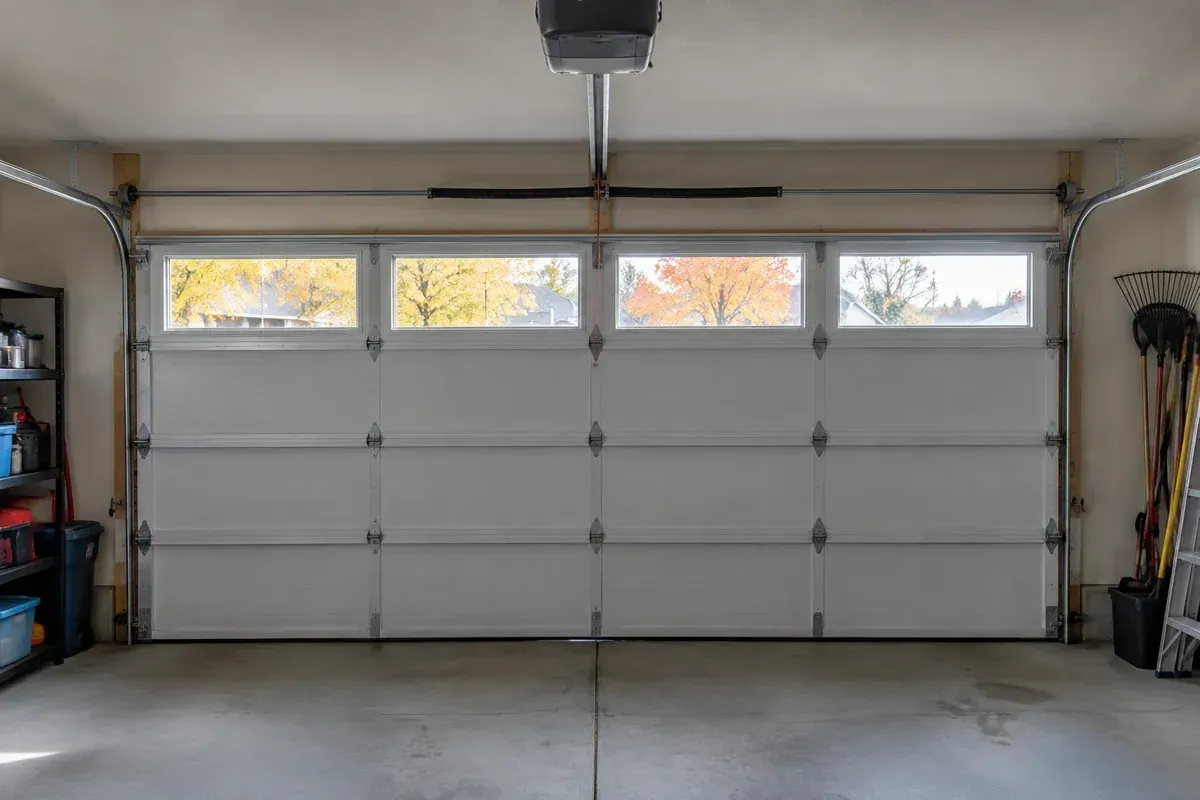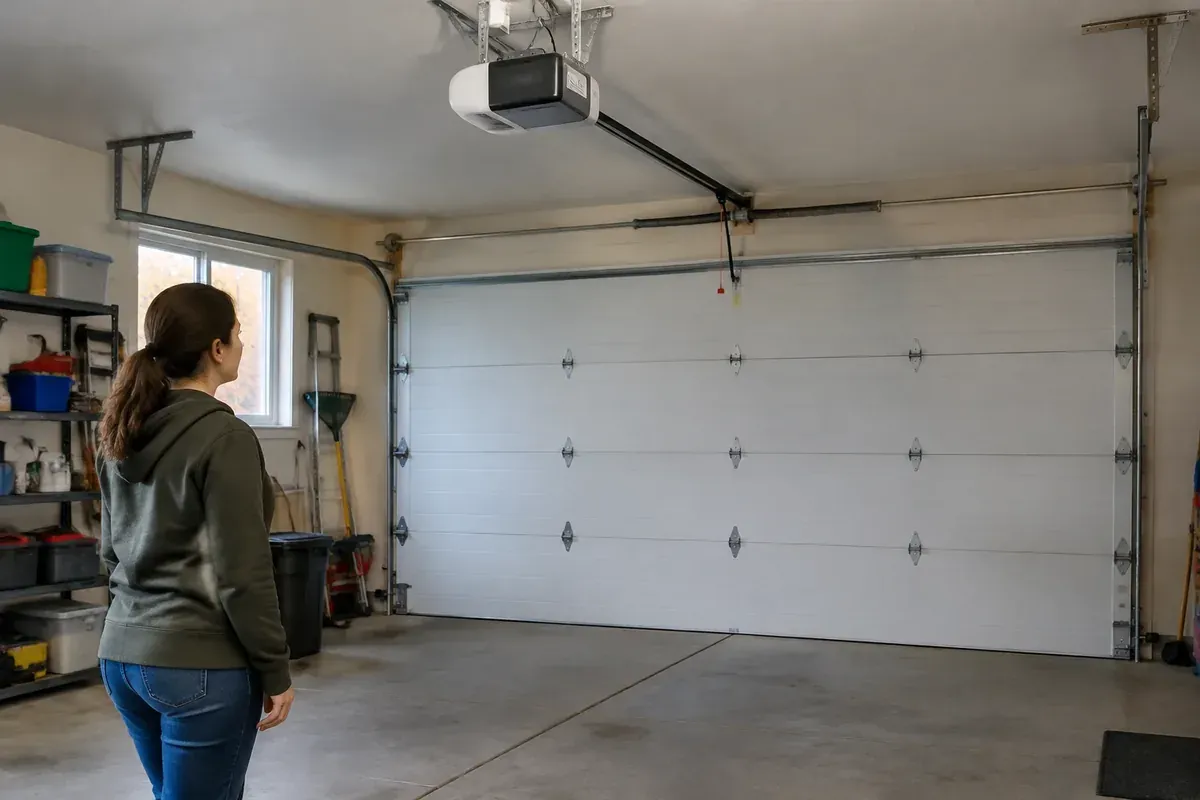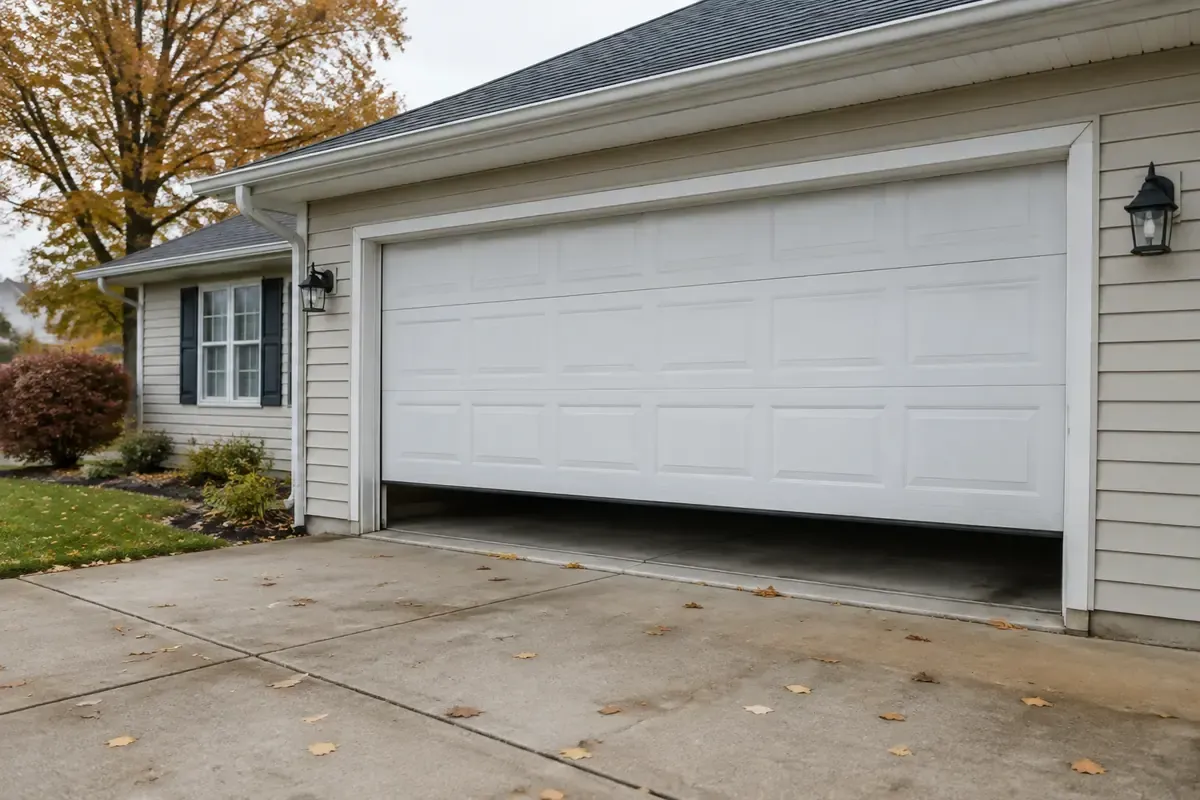
Why Is My Garage Door So Loud? Safe Checks and Fixes
A garage door usually gets louder because moving parts are rubbing, worn parts are rattling, or the opener is passing vibration into the garage. If you're asking, “Why is my garage door so loud?” the most useful clues are what changed, where the sound comes from, and whether the door still moves smoothly.
A light squeak is different from a sudden bang followed by crooked travel. Don't keep running the door to find out which problem you have. If the movement looks unsafe, stop using it and describe the noise to a garage door professional.
Why Is My Garage Door So Loud All of a Sudden?
Some operating noise is normal. You'll hear the opener run, the rollers travel, and the door sections move through the curved track. A familiar, steady sound matters less than a new sound or a noticeable change in movement.
Think about what you heard before the problem started. Did a quiet hum turn into a harsh rattle? Did the door start squealing only near the top? Has the opener begun sounding strained even though the door still opens?
Watch the movement, not just the volume
A door that moves evenly but squeaks may have a friction problem. A door that shakes, leans, jumps, or pulls unevenly needs more caution. Noise paired with a change in travel is a stronger warning than noise alone.
Stop using the door if you notice:
- One side rising ahead of the other.
- A cable hanging loose or appearing frayed.
- A roller out of its track or a track pulling away from its support.
- A door section bending as the opener pulls.
- A sudden bang followed by strained or uneven operation.
Don't run another cycle just to record the sound. An existing video can help, but protecting people and property comes first.
Start With Friction and Vibration
Friction and vibration are common reasons for a garage door making noise while it still operates. They can sound similar from inside the house, especially when an attached garage shares framing with a bedroom or living area.
Friction happens where moving surfaces rub. Hinges, roller bearings, and other moving joints may squeak when they need manufacturer-approved care or have begun wearing out. Vibration can make brackets, door sections, or opener supports buzz and rattle.
In Lima, a cold morning can make an existing problem easier to hear. Temperature changes can affect how parts move, while moisture and road salt carried into the garage can contribute to corrosion. Still, a seasonal change is not a reason to dismiss a new grinding sound.
Use the sound as a clue, not a diagnosis
The same sound can come from different parts. This table can help you describe the problem without assuming that a particular part needs replacement.
| Sound or pattern | Possible explanation | Safest next step |
|---|---|---|
| Squeak during otherwise smooth travel | Friction at a moving joint or worn bearing | Check the door maker's maintenance instructions |
| Rattle through much of the travel | Vibration, loose hardware, or worn moving parts | Observe from a safe distance and arrange an inspection if it persists |
| Grinding near the opener | Opener drive wear or resistance elsewhere in the door system | Stop repeated operation and have the system checked |
| Scraping at the same point | A roller, track, panel, or other part contacting something it shouldn't | Stop use if there is binding, shaking, or visible damage |
| Bang followed by crooked movement | Possible failure of a spring, cable, or supporting part | Keep clear and call for professional service |
The key is to match the noise with the door's behavior rather than buying parts based on sound alone.
Worn Parts and Opener Problems Can Sound Similar
Rollers, hinges, and bearings can become noisy as they wear. A damaged roller may rumble or scrape instead of traveling smoothly. A worn hinge can chatter as the door sections change direction through the curve of the track.
The opener can also become louder because its own drive parts are worn. But sometimes the opener is simply working harder to move a door that has another problem. Replacing the opener without checking the door can leave the real cause untouched.
Notice where and when it happens
A steady hum near the opener suggests a different starting point than scraping beside a track. Noise at the same point in travel may help a technician locate a damaged part or an area of interference.
These are clues you can report from normal use, not reasons to keep testing. If the opener housing shakes noticeably, the door hesitates, or the motor sounds strained, stop cycling it and consider garage door opener repair and diagnosis.
A heavy-feeling door is not just a noise issue
If you've already noticed that the door feels unusually heavy during manual use, tell the technician. The spring system helps counterbalance the door, so a change in lifting effort can point to a balance or spring problem.
Don't disconnect a raised or questionable door from its opener to test its weight. A door that isn't properly supported may move unexpectedly. Likewise, increasing opener force is not a safe fix for a door that has become harder to lift.
Make Safe Observations Without Touching Moving Hardware
You don't need to stand beside a moving roller or reach over the door to collect useful information. Start with what you already noticed, then make a visual check only from a safe position while the door is stationary.
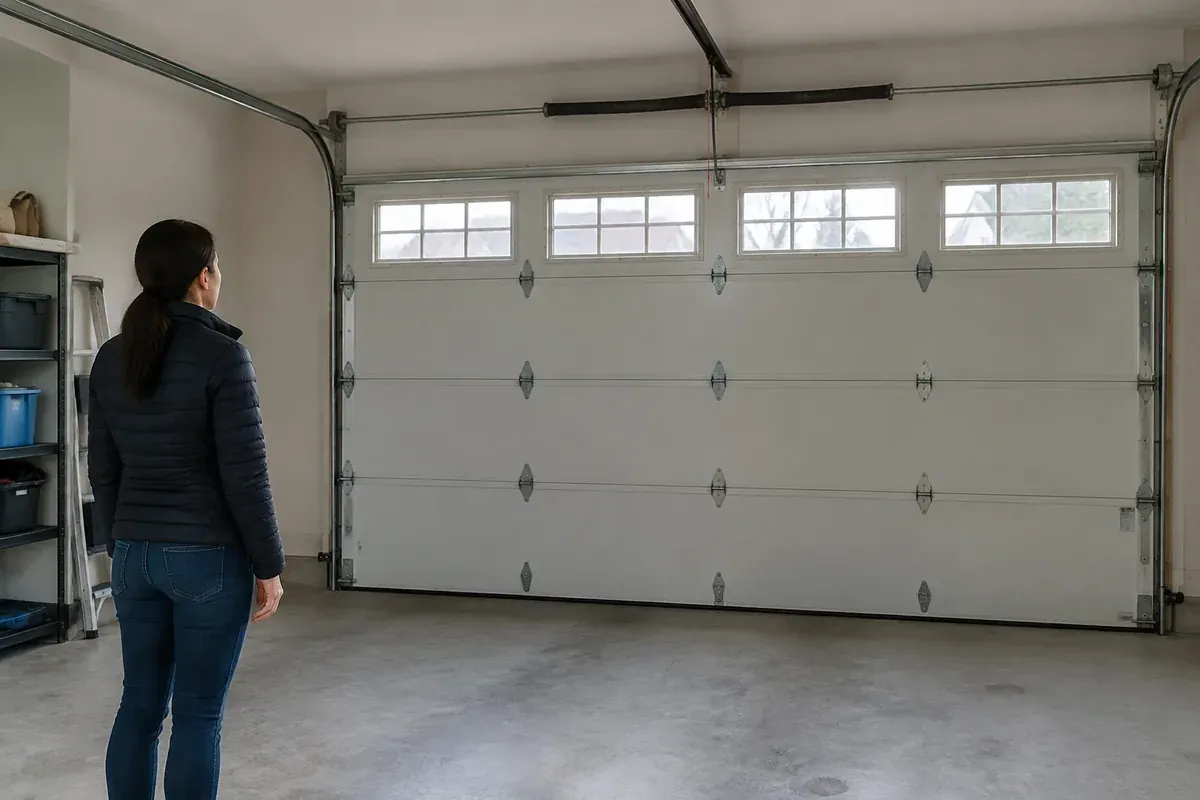
If the door is stuck open or partly open, don't walk underneath it to inspect the hardware. Keep people, pets, and vehicles away from the opening until the door can be assessed.
Useful details to write down include:
- Whether the noise happens while opening, closing, or both.
- Whether it starts immediately or at a particular point in travel.
- Whether it sounds closest to the opener, a side track, or the door itself.
- Whether the door has begun shaking, hesitating, or looking crooked.
- Whether the change followed freezing weather, an impact, or recent work.
From a clear viewing position, you may spot a bent track, hanging cable, damaged panel, or obvious debris. Don't reach into the track, push on a roller, or try to straighten anything to confirm your guess.
For property managers, ask residents to describe the sound and stop repeated testing. A short note about when the change began is more useful than several people operating a questionable door.
Winter deserves extra care around Lima, Elida, and Wapakoneta. If the bottom seal appears frozen to the ground, don't keep commanding the opener to pull it free. This guide to garage door trouble during Lima winters explains related cold-weather concerns.
Check Manufacturer Guidance Before Adding Lubricant
Lubrication can help some friction-related noises, but spraying every visible part is not maintenance. The right product and application points depend on your door, rollers, and opener.
Find the maintenance instructions for the actual equipment before applying anything. Some moving joints may need lubrication, while sealed bearings or certain opener components may not need the same treatment. Don't assume that a general-purpose household spray is appropriate.
Keep the tracks free of buildup
Don't coat the tracks with grease to quiet the rollers. Grease can collect grit, and it won't repair a damaged roller or correct a bent track. Cleaning accessible surfaces and lubricating approved moving points are different tasks.
Only do maintenance that the manufacturer describes as suitable for an owner and that you can reach safely with the door fully closed and secured according to its instructions. Leave spring-area work and anything requiring you to reach around loaded hardware to a professional.
Your own equipment manual should guide the product choice and procedure.
If an approved maintenance step doesn't resolve the noise, don't keep adding more lubricant. Persistent squealing, grinding, or rattling may require a repair rather than another application.
Leave Springs, Cables, and Loaded Hardware Alone
Garage door springs store energy, and cables help carry the door's load. The brackets and fasteners connected to those systems are not ordinary loose hardware. Removing the wrong fastener can release a part or let the door move unexpectedly.
Don't adjust spring tension, reposition cables, loosen bottom brackets, or try to force a roller back into place. Avoid broad advice to “tighten everything,” too. Not every visible bolt is safe for a homeowner to turn.
A technician can check the door's balance, inspect its moving parts, and determine whether the opener is dealing with extra resistance. That whole-system check matters because the loudest part isn't always the failed part.
Soundproofing comes after repairs
If your main concern is noise reaching an upstairs room, first make sure the door and opener are working correctly. Insulation or sound treatment won't fix scraping rollers, worn bearings, or poor balance.
Don't attach heavy soundproofing material to the moving door without professional guidance. Added weight can change the door's balance and affect how the system operates. Once the mechanical problem is resolved, ask about compatible ways to reduce transmitted vibration or improve room-side sound control.
Know When to Stop Using the Door and Call
Stop using the door when noise comes with crooked travel, binding, visible damage, a loose cable, or a sudden change in how the door carries its weight. Keep clear of the opening, and don't try to pull the door down or force it up.
A mild squeak with smooth, even movement may allow time to check the maintenance instructions. A harsh grind or repeated banging deserves more caution, even if the opener still manages to move the door. “It still works” doesn't tell you whether continued use is safe.
For a persistent noise without obvious damage, arrange an inspection before it becomes part of your daily routine. Tell the technician what the sound resembles, where you hear it, and whether it occurs during opening or closing. Final repair pricing depends on what the technician finds after seeing the door.
Describe the sound and when it happens to Same Day Garage Door at (419) 909-0197, or schedule a garage door inspection online. If the noise persists or comes with uneven movement, leave the door alone until it's checked.
Frequently asked questions
Why is my garage door so loud when I open it?
Friction, worn rollers or hinges, vibration, and opener problems can all make a door louder during opening. If the noise comes with shaking, crooked movement, or a strained motor sound, stop using the door and have the system inspected.
Why does my garage door feel heavy when I open it?
A door that feels unusually heavy may have a spring or balance problem, though binding can also add resistance. Don't adjust the springs or disconnect a raised door to test it; report the change to a garage door technician.
What should I put on a noisy garage door?
Use only the lubricant and application points recommended by your door and opener manufacturers. Don't grease the tracks or spray everything, because lubrication won't repair worn parts or correct alignment problems.
How can I soundproof my garage door?
Have mechanical noise and vibration checked before adding sound treatments. Don't attach heavy material to the moving door without professional guidance, since added weight can affect its balance.
Can I keep using a noisy garage door?
That depends on the sound and the door's movement, not just whether it still opens. Stop using it if you notice grinding with binding, uneven travel, loose cables, visible damage, or a sudden bang followed by changed operation.