Garage Door Won't Close All the Way? Safe Checks
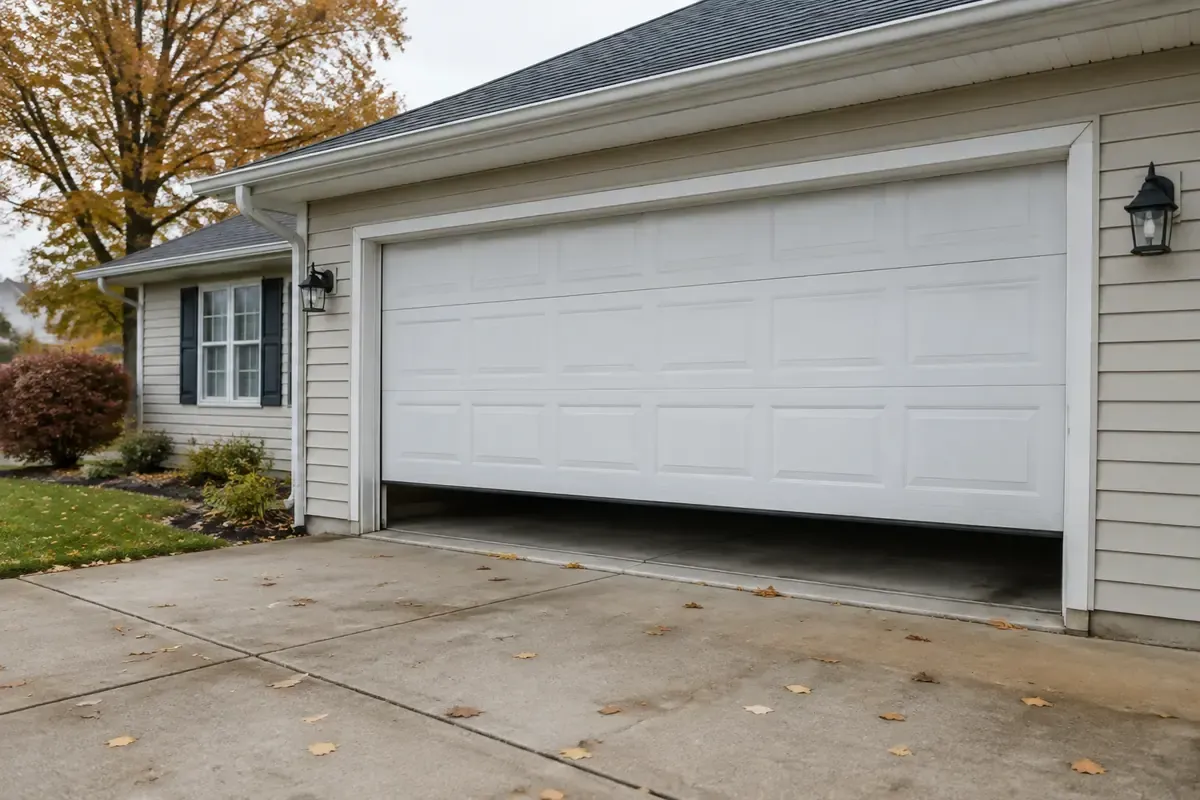
If your garage door won't close all the way, start by looking for an object, packed snow, or loose debris at the threshold. Stay outside the door’s path, and stop using it if it hangs crooked, jerks, or makes a new grinding sound. Don’t push it down or turn up the opener’s force.
The shape of the gap and the way the door stops can help narrow down the cause. If something looks unsafe, contact Same Day Garage Door for a repair inspection rather than trying another closing cycle.
Does Your Garage Door Stop Short or Start Back Up?
Before you touch anything, think about what happened during the last closing attempt. Did the door stop above the floor and stay there? Did it touch the floor and reverse? Or did one corner reach the floor while the other remained raised?
Those are different symptoms. A door that stops at the same spot without reversing may have a downward-travel setting problem, but that pattern alone does not prove the opener needs adjustment. Binding hardware or another fault can also interrupt movement.
A door that starts back up may be reacting to an obstruction, a safety-sensor problem, or resistance. If it touches the floor before reversing, the opener may be trying to push it farther than it should. Avoid repeatedly running it to see whether the problem clears itself.
Look at the gap, not just the opener
A fairly even gap across the bottom points you toward a different set of possibilities than a wedge-shaped opening. An uneven gap can involve the floor, the bottom seal, or a door that is no longer sitting level.
Also notice whether the door itself is above the floor or whether daylight shows only beneath worn weatherstripping. A torn seal can leave an opening even when the door has completed its normal travel. Adjusting the opener to crush the seal against an uneven floor is not a sound repair.
Check for Obstructions and Visible Debris First
An ordinary object can cause a frustrating closing problem. A broom handle, a folded floor mat, a trash bag, or a piece of gravel near the bottom seal may be easy to overlook from inside your car.
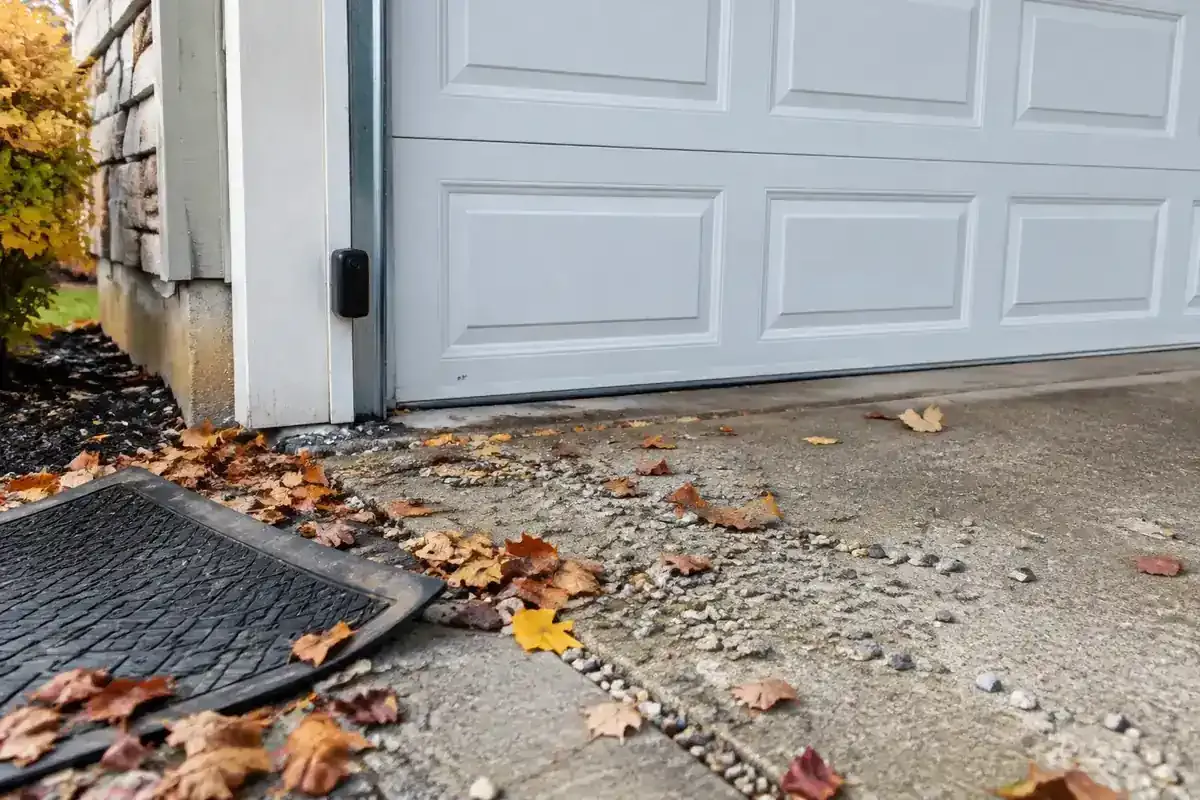
In Lima and nearby towns such as Elida and Wapakoneta, winter adds packed snow, slush, and ice to that list. Fall leaves can also collect along the threshold or around the sensor area. Clear loose material only when the door is stationary and you can reach it without stepping or reaching underneath it.
What you can safely look for
From beside the opening, check for:
- Tools, toys, storage bins, or yard equipment extending into the door’s path.
- Loose leaves, gravel, or snow along an accessible threshold.
- A floor mat that has shifted beneath the bottom edge.
- Cobwebs or loose dirt around the safety-sensor lenses.
- A bottom seal that appears frozen to the floor, folded over, or damaged.
If the lenses are safely accessible, gently wipe them with a soft, dry cloth while the door is stationary. Do not loosen the sensor brackets, change the wiring, or tape anything over the lenses. This is a basic cleaning check, not a reason to bypass a safety device.
Do not chip ice away from beneath a suspended door or use the opener to break a frozen seal loose. If you cannot clear the area without entering the door’s path, leave it alone and arrange service.
Consider Travel Settings and Mechanical Resistance
Once visible obstructions are ruled out, the cause may be less obvious. The opener controls how far the door moves, while the springs, cables, rollers, tracks, and hinges help it move properly. A problem in either system can keep the bottom edge from reaching the floor.
Downward travel is not the same as closing force
Travel settings tell the opener where to stop. Force settings affect how the opener responds to resistance. Increasing force does not correct a wrong stopping point, straighten damaged hardware, or repair an unbalanced door.
If the problem began after an opener installation, a control reset, or work on the door, tell the technician. That history can help guide the inspection. Adjustment procedures vary by opener, so avoid copying a button sequence from a video for a different model.
A door can bind before it reaches the floor
A damaged roller, bent track, loose hinge, or damaged panel can create resistance during downward movement. Spring or cable trouble may also leave the door uneven or difficult for the opener to move.
The following observations are useful clues, not a remote diagnosis:
| What you notice | What it may suggest | Safest next step |
|---|---|---|
| An even gap with a consistent stopping point | Travel setup or another repeatable interruption | Have travel and door movement checked |
| One corner hangs lower than the other | Uneven floor, seal trouble, or a leveling problem involving hardware | Stop operation if the door looks crooked or cables look loose |
| Jerking, scraping, or visible track damage | Mechanical resistance or damaged hardware | Leave the door unused and request repair |
| The door reaches the floor, then reverses | An obstruction, excessive downward travel, or resistance | Check the accessible threshold; avoid repeated attempts |
| Daylight appears only under a worn seal | Weatherstripping damage or an uneven floor | Have the seal and floor contact evaluated |
A technician should check door movement before deciding the opener is the whole problem. Garage door opener repair and diagnosis can address control and travel issues, but the opener should not be used to overpower a struggling door.
Make Safe Checks From Outside the Door’s Path
Keep children, pets, tenants, and other people away from the opening while you assess the situation. A partly open door is not a safe place to walk, stand, or work beneath, even if it has been sitting still.
Start with observation rather than tools. From the side, look for a crooked bottom edge, a roller outside its track, a hanging cable, or a visibly damaged panel. If you see any of those conditions, stop there.
Clear a simple obstruction only when it is accessible
If the door is stationary and loose debris can be removed without reaching beneath it, clear the debris. Keep your hands away from panel joints, hinges, rollers, and tracks. Do not try to straighten or tighten hardware during this check.
After a simple obstruction has been removed, a supervised closing attempt may be reasonable if the door looks straight and showed no signs of damage or strain. Use the normal control, keep the whole opening in view, and remain clear. Stop testing if it stalls, jerks, scrapes, or leaves the same unexplained gap.
Leave the emergency release alone if the door is unstable
Pulling the release can separate the door from the opener, but it does not make a damaged door safe. A raised or partly open door may move unexpectedly if its springs or other supporting parts are not working correctly.
For this problem, you do not need to disconnect the opener to gather useful information. Manual balance checks are better left to a technician when the door’s condition is uncertain. A ladder, a wrench, or a strong helper does not remove the risk from a heavy, unstable door.
Don’t Force It Down, Bypass Sensors, or Turn Up Force
It is tempting to press down on the door when the remaining gap looks small. Don’t. You could put your fingers near pinch points, worsen damaged hardware, or cause unexpected movement.
Repeated opener cycles are not a repair either. If the door is binding, running it again puts the system back under the same strain. Stop once a safe, basic check has failed to resolve the problem.
Never bridge sensor wires, tape sensors together, or use a closing method meant to defeat the safety system. A sensor problem needs proper correction, not a workaround that leaves the opening unprotected.
Lubrication is not a cure for a door that stops short
Spraying everything with lubricant can hide the real issue and create a mess. Standard WD-40 Multi-Use Product is not a substitute for the lubricant specified by the door manufacturer, and lubricant cannot straighten a track or restore a damaged cable.
Some rollers have parts that require lubrication; others have sealed bearings or materials that need different care. Keep lubricant off sensor lenses, and do not grease the track as a general fix. If you do not know the hardware type, wait for the inspection.
My advice is simple: treat a new closing problem as a symptom to understand, not something to overcome with more pressure. The right repair should let the door move correctly without forcing it.
Record These Details Before Requesting Repair
You do not need a diagnosis before calling. Clear observations are more helpful than guessing which part has failed, especially when the door only acts up at certain times.
If you are asking, “Why does my garage door not close all the way?” write down what you can see from a safe spot:
- Whether the door stops and stays put or reverses upward.
- Whether the gap is even or larger at one side.
- Whether the problem started suddenly or gradually became worse.
- Any scraping, popping, grinding, or unusual motor noise.
- Recent ice, an impact, a power interruption, or work on the opener.
- Whether the door is currently open, partly open, or closed.
A photo taken from the side of the opening can help show the gap. Photograph an accessible opener label only if you can do so safely. Do not climb onto stored items or stand beneath the door to get a better picture.
Property managers should also note access arrangements and whether the garage is attached to an occupied home. Keep residents informed that the door should not be operated until it is cleared for use. For broader repair concerns, see garage door repair services in Lima.
When to Call a Garage Door Professional in Lima
Call for service if clearing an accessible obstruction does not solve the problem. A repeated gap, uneven movement, or a new noise deserves an inspection rather than repeated trial-and-error adjustments.
Treat a hanging cable, an off-track roller, a visibly crooked door, or a damaged spring as a reason to stop using the system immediately. Keep the area clear and do not try to secure the door by working on its hardware. Same Day Garage Door offers emergency service around the clock in Lima and nearby communities.
A sound inspection should separate the cause from the symptom. That may mean checking the door’s movement and hardware, inspecting the safety system, and then checking the opener’s travel settings. Replacing an opener is not automatically the answer to a door that stops short.
Final pricing is confirmed after the technician sees the door. The needed work could involve an obstruction, weatherstripping, opener setup, or damaged hardware, so a fixed price without an inspection can be misleading. Discuss the details you recorded with Same Day Garage Door.
If your door still leaves a gap, call Same Day Garage Door at (419) 909-0197 or use the contact form linked above to request an inspection.
Frequently asked questions
Why is my garage door not closing all the way and going back up?
The opener may be responding to an obstruction, a safety-sensor issue, or resistance in the door. If it touches the floor before reversing, the downward-travel setting may also need attention, but the door’s movement should be checked before adjustments are made.
Can I spray WD-40 on garage door rollers?
Do not use standard WD-40 Multi-Use Product as a general fix for a door that stops short. Follow the door manufacturer’s lubricant guidance because roller materials and bearing designs differ, and lubrication will not repair damaged hardware.
How do I fix my garage door not closing all the way?
Start by looking for loose debris or an object at the threshold without reaching under the door. If clearing an accessible obstruction does not help, stop testing and have the door hardware, safety system, and opener travel checked.
Why does my garage door have a gap on one side when closed?
An uneven floor or damaged bottom seal can leave a side gap, but a crooked door may also have a cable or other hardware problem. If the door looks tilted, moves unevenly, or has a loose cable, leave it unused until a technician checks it.
Should I adjust the opener’s closing force to eliminate the gap?
No, increasing force is not a safe way to correct an unexplained closing gap. The cause may be incorrect travel or mechanical resistance, and adding force can conceal the problem instead of fixing it.