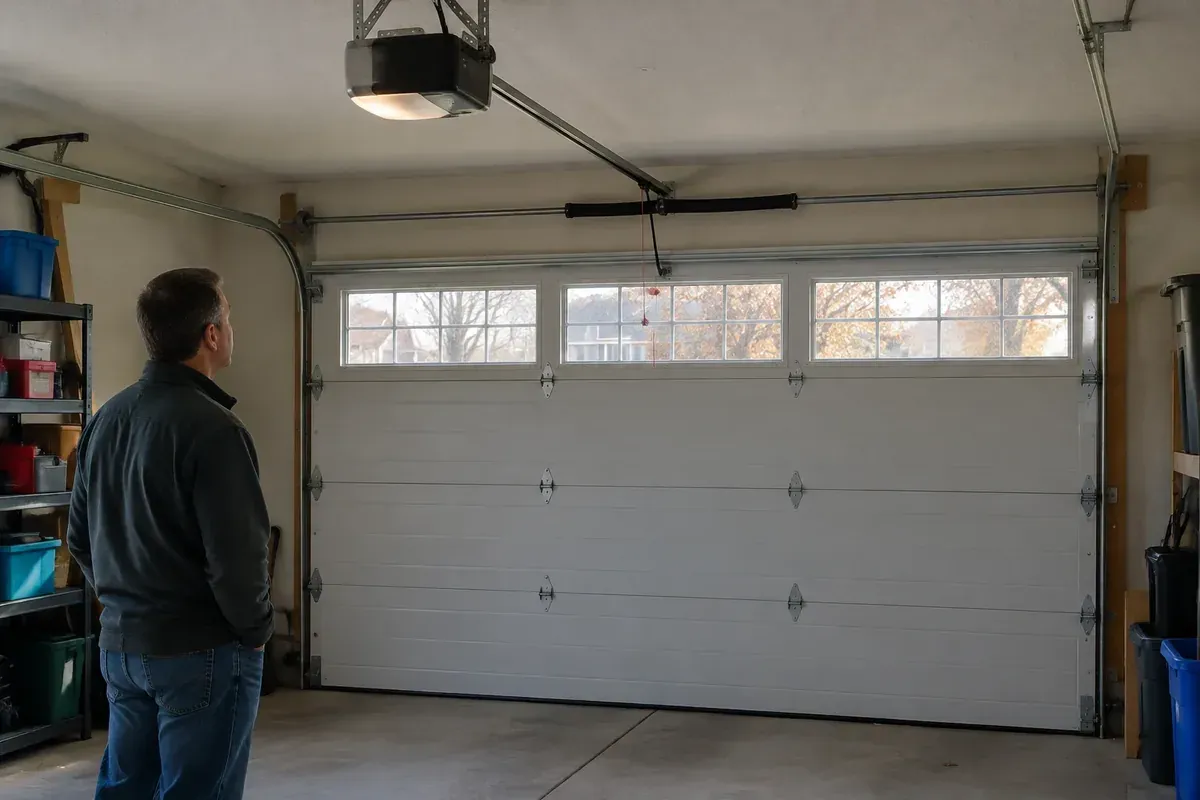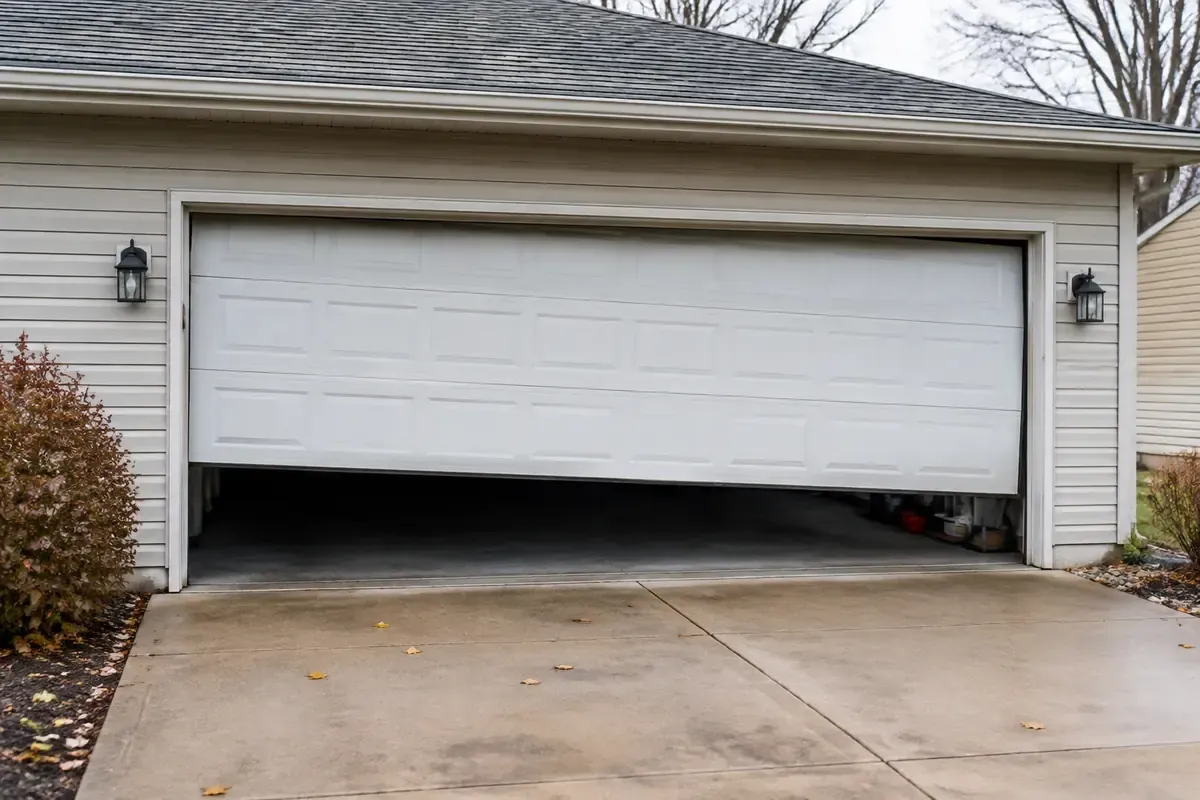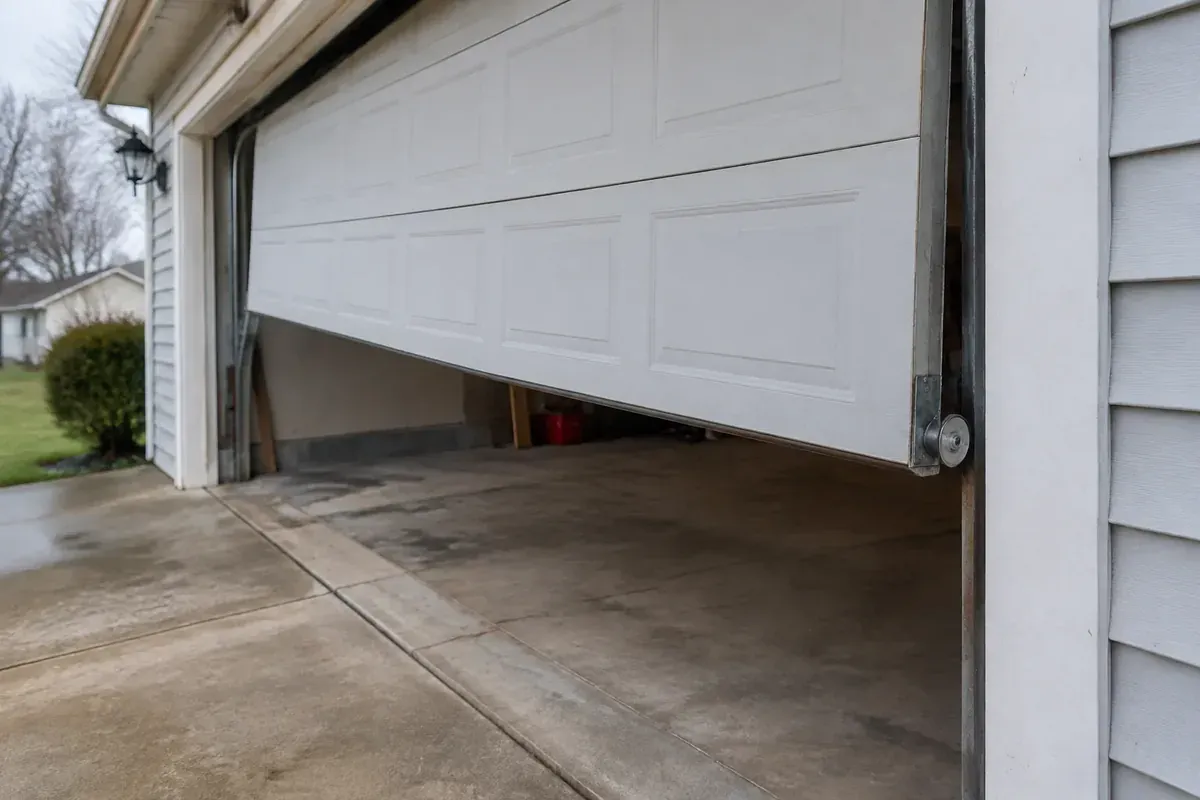
Garage Door Stuck Halfway? Stay Clear and Get Help
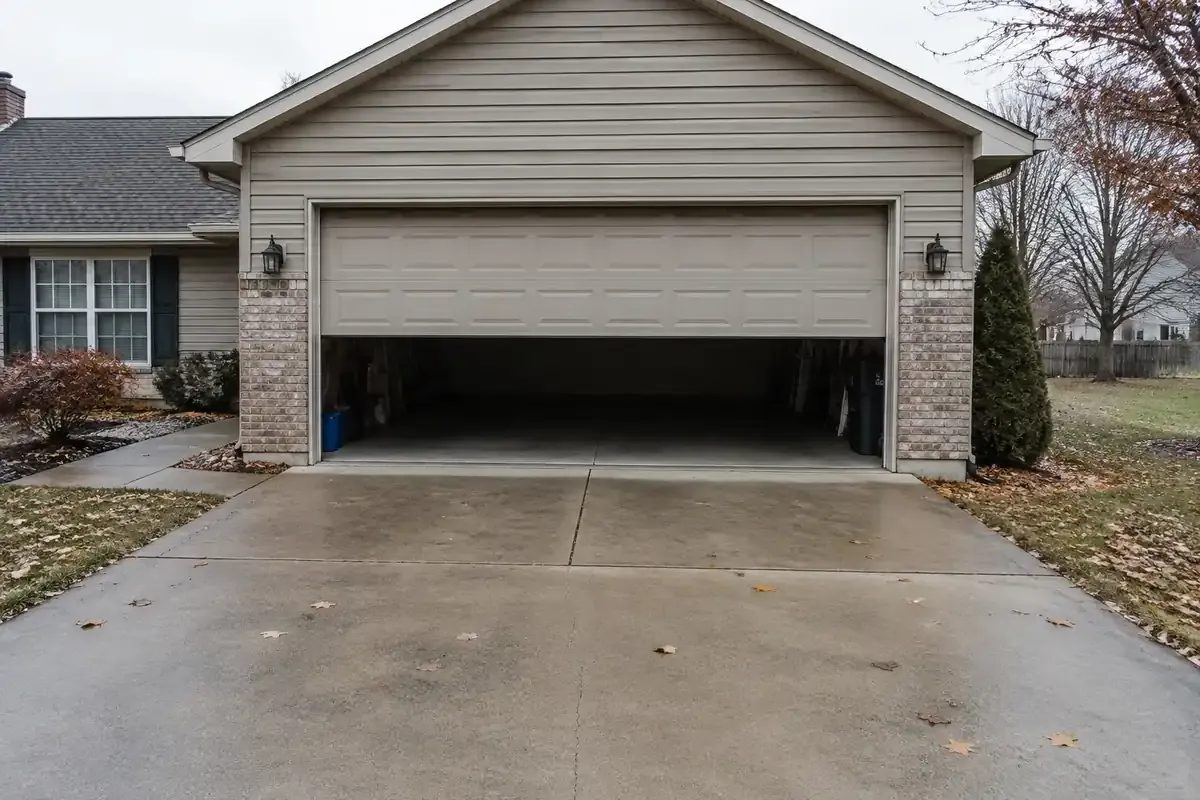
If you have a garage door stuck halfway that will not move in either direction, stop using the controls and keep everyone away from the opening. Do not walk underneath, pull the emergency release, or try to lift or lower the door. A suspended door may have a damaged spring, cable, roller, or track, and it can shift without warning.
For help in Lima and nearby towns, you can contact Same Day Garage Door for emergency-service guidance. While you arrange help, your job is to keep the area clear and gather only the details you can see safely.
Garage Door Stuck Halfway: Secure the Area First
A door stranded partway open is different from one that occasionally stops while opening but still responds normally. If yours is now hanging in place and will not move either way, treat it as unsafe until someone checks its support system.
You do not need another test run to confirm the problem. Repeatedly pressing the remote can put more force on a jammed door or cause unexpected movement.
Keep people, pets, and vehicles away
Use another entrance to the house or garage. Keep children and pets away from both sides of the opening, including the driveway immediately outside it.
Leave a vehicle where it is if moving it would require driving beneath the suspended door. A car that looks as though it will clear the bottom edge still should not pass underneath. The concern is not just clearance; it is whether the door could drop or tilt while someone passes through.
For a rental property or shared garage, notify anyone who might use the door. Tell them plainly: the door is unsafe, do not use the remote, and do not enter through the opening. Keep remotes out of reach so another person does not accidentally operate it.
Avoid reaching for power connections
Do not climb a ladder, stand beneath the door, or reach across its hardware to unplug the opener. If power can be shut off from a safely accessible location away from the door, that may prevent accidental activation, but it does not make the door safe to touch.
An opener without power is not a secured door. Damaged lifting or track parts can still allow movement.
Look for Visible Obstructions Without Touching Anything
Start with what you can see from outside the door’s travel area. Sometimes an object is visibly caught near the door, such as a yard tool, storage bin, or loose material beside a track.
Look only. Do not reach into the opening, move a trapped object, or pull something out from beneath the door. The object may be holding pressure, and disturbing it could let the door move.
Useful observations include:
- A tool handle or stored item touching a track or panel.
- A bent section of track or a loose bracket.
- A roller that appears outside its track.
- A cable hanging loose beside the door.
- A panel that is folded, twisted, or caught against the opening.
- Snow, ice, or other material near the threshold or side of the opening.
In Lima, late-fall freezes can leave ice around a garage threshold. Wet leaves and windblown debris can also collect near the opening. Mention those conditions when you call, but do not assume weather explains a door hanging halfway up.
A sensor problem is not a complete explanation
Photo-eye sensors can prevent a door from closing or cause it to reverse. However, a door that will not move in either direction needs more caution than a routine sensor check.
Do not crouch underneath the suspended door to clean or align sensors. Also, do not hold down a wall control to try to override a safety response. Clearing a sensor issue would not fix a broken cable, damaged track, or failed spring.
Notice Whether the Door Is Level
From a safe location outside the opening, look at the bottom edge of the door. Does it appear level, or is one side noticeably lower?
A crooked door can point to uneven support or binding. A cable may have slipped or failed, a roller may be out of place, or track damage may be preventing normal travel. You cannot confirm the cause from appearance alone.
If the door is leaning, do not push up the low side or pull down the high side. That can twist the panels further and shift the load onto already stressed hardware. Our guide to a garage door stuck on one side explains why forcing a crooked door can make the situation worse.
A level door can still be unsafe
A straight bottom edge does not prove that the springs, cables, or opener connection are sound. The door may be bound in the tracks or held in place by parts that are not meant to support it that way.
Use these clues to describe the problem, not to decide that it is safe to move:
| What you can see or recall | What it might suggest | Safe next step |
|---|---|---|
| One side hangs lower | Uneven cable support, roller trouble, or track binding | Keep clear and report which side is lower |
| A cable is loose or hanging | A cable or related lifting component may have failed | Do not touch, pull, or try to reseat it |
| A visible gap in a torsion spring | The spring may be broken | Describe it without approaching the spring |
| The opener hummed but the door stayed still | Binding, a lifting problem, or an opener fault | Stop using the controls and report the sound |
| A panel or track looks bent | Impact damage or a mechanical jam | Leave the door and any trapped objects alone |
| Nothing looks obviously damaged | The problem may be hidden or hard to identify | Arrange an inspection rather than testing again |
There is often overlap between these symptoms. The safest diagnosis comes after the door has been secured and its parts can be inspected without relying on guesswork.
Gather Safe Photos and Explain What Happened
Clear information helps a technician prepare. You do not need to get close to provide it, and you should skip photos entirely if taking them would put you near the opening or beneath the tracks.
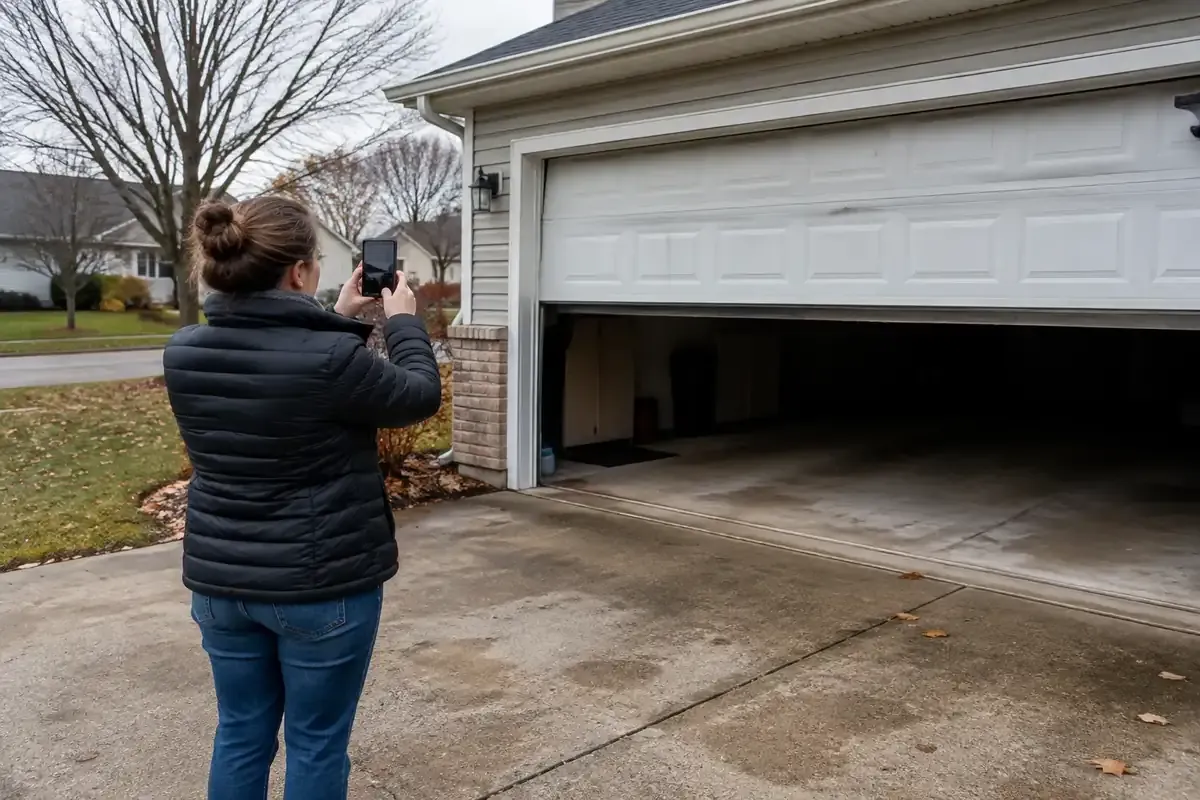
From a safe position, a wide photo of the whole door can show its height, angle, and visible damage. Use your phone’s zoom instead of moving closer. Photograph the interior only if you already have safe access through another entrance and can remain outside the door’s travel area.
Do not stage a demonstration video. Another operating attempt is not worth the risk just to capture a sound or show that the door is stuck.
Describe the sequence, not just the final position
When you call, explain what happened immediately before the door stopped. Useful details include:
- Whether it was opening or closing.
- Whether you heard a bang, scraping, popping, or humming.
- Whether the door tilted before stopping.
- Whether a vehicle or stored item recently hit it.
- Whether the opener stopped on its own or kept running.
- Whether this has happened before or is completely new.
- Whether there is another safe entrance to the garage.
Also mention if a vehicle is trapped or if the open garage gives access to the home. For a managed property, provide the correct unit or garage location and a contact who can authorize access and repair.
Be honest about anything already tried, including pulling the release or pushing on the door. That information helps the technician understand what may now be supporting it.
Do Not Pull the Release, Prop the Door, or Lift It
The emergency-release cord disconnects the door from the opener. It does not repair the counterbalance system, straighten the tracks, or secure the door against falling.
On a stranded door, pulling that cord may remove a connection that is helping hold the door in place. Leave it alone until a professional has evaluated and secured the door.
Props and helpers do not solve the support problem
Do not place a ladder, board, jack, trash can, or other improvised support under the bottom edge. Positioning the support puts you in danger, and the object can slip, tip, or damage the panel.
Having another person help you lift is not a safe substitute. A garage door that normally feels manageable can become difficult to control when its springs are not supporting it properly. If the door shifts sideways or binds, both people may be exposed to the same sudden movement.
Keep hands away from panel joints, rollers, cables, and brackets. Do not loosen hardware, cut a cable, adjust a spring, or hammer a roller back into place.
Do not use the opener to force the issue
Repeated attempts can damage opener components, bend door sections, or worsen a mechanical jam. Changing the opener’s force or travel settings is not an appropriate fix for a door stranded halfway.
If a spring has failed, the repair involves restoring the door’s counterbalance, not asking the opener to lift harder. You can read about garage door spring replacement and repair without touching the spring itself.
The same caution applies if you suspect the motor. An opener repair assessment should account for the condition of the door it operates, rather than assuming the motor is the only problem.
When a Suspended Door Needs Professional Assistance
A door stuck in midair that will not move either way already warrants professional help. Visible cable damage, a crooked panel, a roller outside the track, or a loud bang before the stop makes that need more obvious, but you do not have to find a broken part before calling.
Tell the service provider that the door is suspended halfway open. That description is more useful than simply saying the remote does not work because it identifies the immediate safety concern.
What the repair visit should address
The first priority is controlling and securing the door so it can be inspected safely. The technician can then check the springs, cables, rollers, tracks, panels, and opener connection to find out what stopped it.
The repair may involve a lifting component, a track problem, an opener fault, or damage affecting several parts. Replacing an opener alone will not correct a damaged door, and straightening a visible bend may not address what caused it.
Before authorizing work, ask what failed, what needs repair, and whether any related damage was found. Also ask how normal movement and safety operation will be checked after the repair. Same Day Garage Door confirms final pricing after the technician sees the door, so a symptom alone is not enough for a firm price.
For more about arranging help, see what to expect from emergency garage door repair in Lima.
Keep the Garage Clear While You Wait
Use another entrance and leave the affected door alone. Do not try to lower it for security, close a small remaining gap, or move it just far enough to get a vehicle out.
In an attached garage, keep the door between the garage and living space closed and secured where possible. Move people and pets away from the affected area, but leave belongings in place if retrieving them means approaching the suspended door.
Cold weather can make an open garage uncomfortable, especially around Lima, Elida, and Wapakoneta. Still, avoiding heat loss is not a reason to pull the release or force the door shut. Do not hang a tarp or other covering from the damaged door or its tracks.
If the door shifts, makes new noises, or drops farther while you wait, move farther away and update the service provider. Do not approach to inspect what changed. If someone is injured or trapped, call emergency responders rather than attempting a garage door repair.
Same Day Garage Door offers emergency service around the clock in Lima and nearby communities. Call (419) 909-0197 for emergency-service guidance, and keep everyone away from the suspended door.
Frequently asked questions
Can I pull the emergency release if my garage door is stuck halfway?
Do not pull the release while the door is suspended and its condition is unknown. Disconnecting the opener may allow the door to fall or shift if a spring, cable, or other supporting part has failed.
How can I tell if a torsion spring is broken?
A visible gap in the spring above the door can indicate a break, and you may have heard a loud bang when it happened. Look only from a safe location, and do not approach or touch the spring to confirm it.
How do I open my garage door halfway safely?
If the door is currently stuck or damaged, do not try to reposition it halfway or move it farther. Once it has been repaired, follow the operating instructions for your door and opener, and never treat a partially open door as a safe place to stand or work.
What should I do when the garage door is stuck and my car is inside?
Leave the car in place if getting it out requires passing beneath the suspended door. Use another entrance, keep others away, and tell the repair provider that your vehicle is trapped.
Does a garage door stuck halfway mean I need a new door?
Not necessarily, because the cause may be a repairable spring, cable, track, roller, or opener problem. Replacement depends on the door’s overall condition and damage, not simply its age or the fact that it stopped.